Appliance and Supply Hose Leaks in Mount Vernon, WA
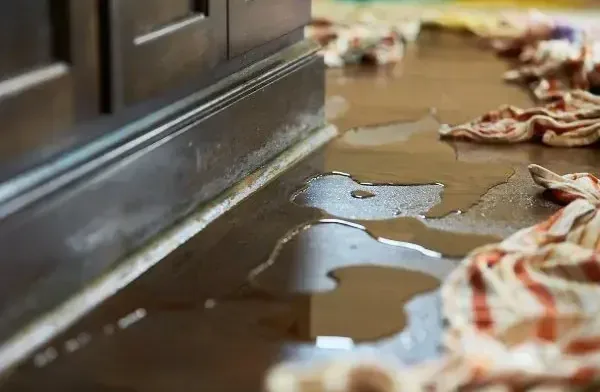
Washer hoses burst, dishwasher fittings drip and fridge water tubing cracks behind the cabinets. The extraction crew pulls the water out from under the appliance and the drying team dries the cabinets, toe kicks and subfloor.
(888) 509-1696Hose or fitting failed? Dry it out now- Under-cabinet drying
- Subfloor readings
- Hose and fitting photos
First steps for appliance and supply hose leaks
Close the supply valve
Shut the valve behind the appliance, or the main.
Unplug the appliance
Only if the outlet and the floor around it are dry.
Pull out what you can
Slide the appliance out a little to see the hose or fitting.
Photograph the part
Shoot the failed hose or fitting before it is thrown away.
The standard behind appliance and supply hose leaks
Rapid local response
Dispatch runs 24/7, and an active leak, flood or backup is treated as urgent on nights, weekends and holidays.
IICRC S500 drying standard
The drying team maps moisture first, sizes air movers and LGR dehumidifiers to the load and keeps them running until the readings say dry.
Claim-ready documentation
Timestamped photos, the moisture map and daily drying logs go into one file an adjuster can follow.
Skagit Valley water know-how
Crawl spaces, river floodplain lowlands, damp winter air and hard freezes all change how water moves through a house here.
What does appliance and supply hose leaks cost in Mount Vernon, WA?
Appliance leak cleanup here typically runs $800 to $5,000, depending on how long the leak ran, whether cabinets and floating floors soaked it up and whether it reached the ceiling below or the crawl space.
Under one appliance, caught fast
$800 to $1,800- Extraction and drying
- Toe kicks removed
- Subfloor readings
Kitchen cabinets and subfloor
$1,800 to $3,500- Under-cabinet drying
- Floating floor lifted
- Daily logs
Upstairs laundry into the room below
$3,000 to $5,000- Ceiling below opened
- Two floors dried
- Claim file
Ranges are typical, not a quote. Water category, square footage, material class and how fast drying started move the number most. The water damage cost calculator gives a planning range.
How appliance and supply hose leaks is handled, step by step
- 1
Pull the appliance
The appliance comes out so the source and the water can be reached.
- 2
Extract
Water comes off the floor and from under the cabinets.
- 3
Open the toe kicks
Panels come off so air can reach under the cabinets.
- 4
Dry and confirm
Readings on cabinets and subfloor until they match dry.
Appliance leaks start small and hide well. A washer hose that bursts can put water across a laundry room in minutes, but a dishwasher fitting or a cracked fridge water tube can drip under the cabinets for weeks. By the time the floor buckles or a smell shows up, water has soaked the toe kicks, the cabinet bottoms and the subfloor.
The usual suspects
- Rubber washing machine hoses that bulge and split with age
- Dishwasher supply and drain connections under the sink
- Plastic refrigerator water tubing behind the fridge
- Toilet supply connectors and fill valves
- Washers on an upstairs floor that leak into the ceiling below
Drying under cabinets and appliances
The appliance comes out first so the extraction crew can reach the water. Meters under the toe kicks and on the subfloor show how far it went. The drying team often removes the toe kick panels and drills small holes in the cabinet base so air movers can push dry air underneath, which can save cabinets that would otherwise come out. Laminate and floating floors are checked closely, since water trapped under them rarely dries in place.
Braided stainless hoses and a quick look behind appliances once a year prevent most of these leaks. The EPA WaterSense program explains how to check for hidden leaks, and the Consumer Product Safety Commission lists appliance recalls.
When the water is gray
A washer drain or dishwasher drain leak carries soap and food residue, which makes it Category 2. Pad and porous materials it soaked are cleaned or removed depending on how long they sat. Water that reached the floor below is covered on the ceiling leak water damage page, and water that dropped into the crawl space on crawl space water removal.
Appliance and supply hose leaks across Mount Vernon and nearby towns
Drying crews cover ZIP 98273 and 98274, from Downtown and the west side river flats to Hillcrest, the Kulshan Creek and Maddox Creek neighborhoods, Little Mountain, Eaglemont and Skagit Highlands.
Coverage also reaches Burlington, Sedro-Woolley, La Conner, Conway, Big Lake, Bay View, Anacortes, Stanwood and Oak Harbor.
Related water damage services
Appliance and Supply Hose Leaks questions, answered
How often should washer hoses be replaced?
Rubber hoses are commonly replaced every five years or so, and braided stainless hoses last longer. A hose that bulges or cracks should be replaced right away.
Can kitchen cabinets be dried after a leak?
Often, yes. Removing the toe kicks and drying under the cabinet base saves many cabinets. Particleboard that swelled usually does not recover.
Why is my floor buckling near the dishwasher?
A slow leak at the dishwasher connection soaks the subfloor and the flooring above it. The fitting needs repair and the floor needs drying before it is replaced.
Is appliance leak damage covered by insurance?
Sudden failures are often covered after the deductible, while slow leaks over weeks may be excluded. Coverage depends on your policy, so check with your own insurer.
How long does it take to dry after an appliance leak?
Usually three to five days. Water under floating floors or cabinets can take longer.
Is water from a washer drain dirty?
Drain water carries soap and residue and is treated as Category 2. Pad and porous materials it soaked are cleaned or removed.
Appliance leak spreading under the cabinets? Get the drying started today.
Water from a washer, dishwasher or fridge runs under cabinets and floating floors where it stays hidden. The drying team finds it and dries it out.