Sewage Backup Cleanup in Mount Vernon, WA
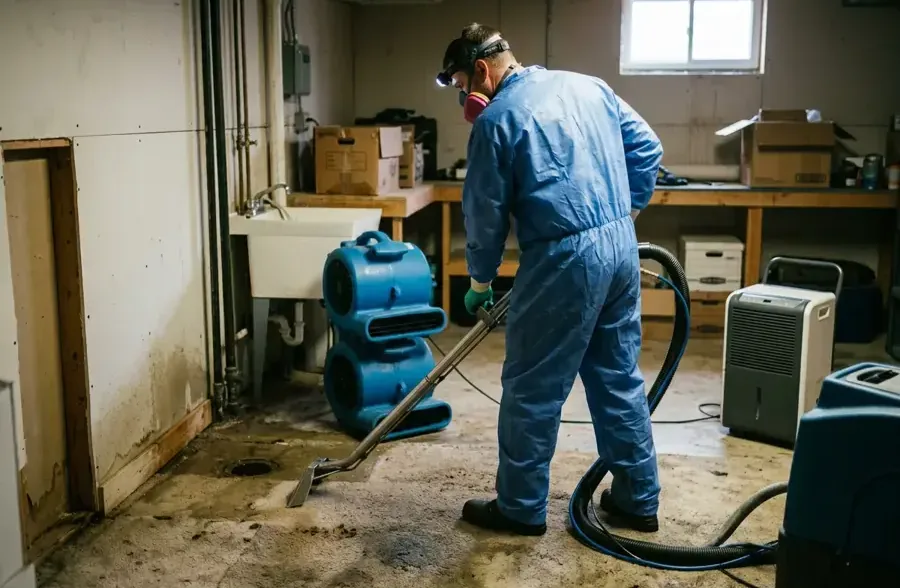
Sewage that backs up through a toilet, tub or floor drain is Category 3 from the moment it appears. The cleanup crew works in full protective gear, contains the area, removes what the sewage touched and treats every surface.
(888) 509-1696Sewage on the floor? Get it contained- Containment and HEPA
- Full PPE crews
- EPA-registered antimicrobial
First steps for sewage backup cleanup
Stop using water
No flushing, showers, laundry or dishwashers until the drain is cleared.
Keep everyone out
Children, pets and anyone with a weak immune system stay away.
Turn off the HVAC
Do not run fans or the furnace blower near the backup.
Photograph from a distance
Document the damage without touching the sewage.
The standard behind sewage backup cleanup
Rapid local response
Dispatch runs 24/7, and an active leak, flood or backup is treated as urgent on nights, weekends and holidays.
IICRC S500 drying standard
The drying team maps moisture first, sizes air movers and LGR dehumidifiers to the load and keeps them running until the readings say dry.
Claim-ready documentation
Timestamped photos, the moisture map and daily drying logs go into one file an adjuster can follow.
Skagit Valley water know-how
Crawl spaces, river floodplain lowlands, damp winter air and hard freezes all change how water moves through a house here.
What does sewage backup cleanup cost in Mount Vernon, WA?
Sewage backup cleanup here typically runs $2,500 to $15,000, depending on how much of the house the sewage reached, whether it soaked carpet and finished walls and how long it sat before cleanup started.
Toilet or tub overflow, one bath
$2,500 to $4,500- Containment and extraction
- Flooring and lower drywall removed
- Antimicrobial treatment
Floor drain backup, basement
$4,500 to $9,000- Carpet and pad removed
- Flood cuts on finished walls
- HEPA air scrubbing
Main sewer backup, several rooms
$9,000 to $15,000+- Multiple rooms contained
- Contents removed and listed
- Long drying and verification
Ranges are typical, not a quote. Water category, square footage, material class and how fast drying started move the number most. The water damage cost calculator gives a planning range.
How sewage backup cleanup is handled, step by step
- 1
Contain
Plastic barriers and HEPA air scrubbers keep the contamination in one area.
- 2
Extract and remove
Sewage comes out, then porous materials it touched are bagged.
- 3
Clean and treat
Hard surfaces are scrubbed and treated with antimicrobial at full dwell time.
- 4
Dry and verify
Drying equipment runs until readings reach the goal.
Sewage carries bacteria, viruses and parasites, so a backup is never treated like a clean leak. The IICRC S500 standard puts it in Category 3 the moment it happens, and the work is organized around keeping it contained and getting contaminated material out of the house.
Why backups happen here
- Tree roots and cracks in older clay and cast iron sewer laterals
- Grease and wipes that block the main drain
- Heavy rain that overloads older blocks, where parts of the city sewer still carry storm water and sewage together
- Floor drains in basements, the lowest opening in the house
The City of Mount Vernon public works pages are the place to report a problem in the city main. A plumber clears the lateral on the house side.
How a sewage cleanup is done
Crews wear the minimum protective gear for Category 3 work: respirator, gloves, eye protection, boots and disposable coveralls. OSHA's flood and cleanup guidance covers the same hazards. The area is sealed off with plastic containment and HEPA air scrubbers run so contaminated air does not spread.
The extraction crew removes the sewage. Porous materials it touched, such as carpet, pad, drywall and insulation above the high-water mark, are removed and bagged rather than dried. Hard surfaces are cleaned, then treated with an EPA-registered antimicrobial left on for its full label dwell time. Drying follows, with readings logged for the claim.
What not to do
Do not run fans or the HVAC system, which spread contaminated air, and do not try to save soaked carpet. If the backup came up during a river or creek flood, see flood water cleanup; if it came through a basement floor drain, basement flooding cleanup covers that room.
Sewage backup cleanup across Mount Vernon and nearby towns
Drying crews cover ZIP 98273 and 98274, from Downtown and the west side river flats to Hillcrest, the Kulshan Creek and Maddox Creek neighborhoods, Little Mountain, Eaglemont and Skagit Highlands.
Coverage also reaches Burlington, Sedro-Woolley, La Conner, Conway, Big Lake, Bay View, Anacortes, Stanwood and Oak Harbor.
Related water damage services
Sewage Backup Cleanup questions, answered
Is it safe to clean up a sewage backup myself?
Small toilet overflows on hard floors can be, with gloves and disinfectant. Anything that soaked carpet, drywall or a basement is Category 3 work that calls for protective gear and containment.
Can carpet be saved after a sewage backup?
No. Carpet and pad touched by sewage are removed and discarded under Category 3 rules.
Why does my basement floor drain back up in heavy rain?
A blocked lateral, roots or an overloaded sewer during heavy rain can push water up the lowest opening in the house, which is often the floor drain.
Does insurance cover sewage backup?
Many policies need a separate sewer backup endorsement. Coverage depends on your policy, so check with your own insurer.
How long does sewage cleanup take?
Removal and treatment usually take one to two days, then drying runs three to five more depending on what got wet.
Who clears the sewer pipe?
A plumber clears or repairs the lateral on the house side, and the city handles problems in the main. The cleanup crew handles the house.
Sewage backing up into the house? Get it contained now.
Sewage is Category 3 from the start, and every hour it sits it soaks deeper into floors and walls. The cleanup crew contains it, removes it and treats the area.