Water Extraction and Removal in Mount Vernon, WA
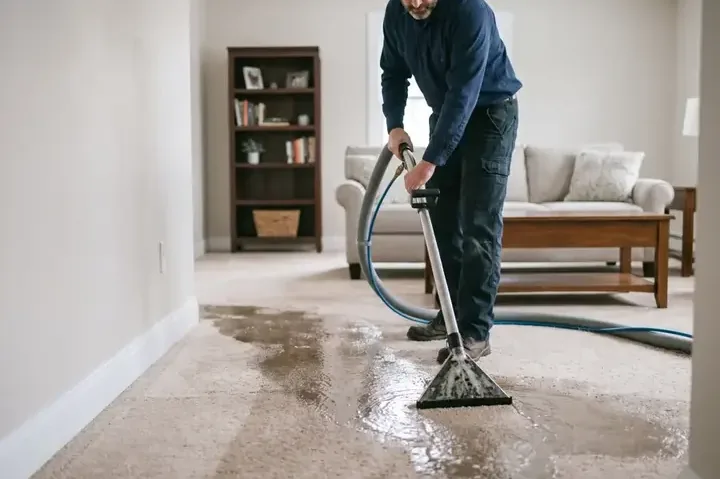
Every gallon pulled out with an extraction wand is a gallon that never has to evaporate. The extraction crew removes standing water from carpet, pad and hard floors first, so drying starts on a lighter load.
(888) 509-1696Water pooling on the floor? Pull it out fast- Truck-mounted extraction
- Weighted carpet wands
- Moisture map first
First steps for water extraction and removal
Stop the source
Close the main valve or the fixture shutoff feeding the leak.
Cut power to wet rooms
Switch off breakers for wet areas if the panel is dry.
Move what you can
Lift rugs, electronics and furniture off the wet floor.
Skip the shop vac
A household vac on a big spill spreads water and can be a shock hazard.
The standard behind water extraction and removal
Rapid local response
Dispatch runs 24/7, and an active leak, flood or backup is treated as urgent on nights, weekends and holidays.
IICRC S500 drying standard
The drying team maps moisture first, sizes air movers and LGR dehumidifiers to the load and keeps them running until the readings say dry.
Claim-ready documentation
Timestamped photos, the moisture map and daily drying logs go into one file an adjuster can follow.
Skagit Valley water know-how
Crawl spaces, river floodplain lowlands, damp winter air and hard freezes all change how water moves through a house here.
What does water extraction and removal cost in Mount Vernon, WA?
Water extraction and the first drying setup typically run $600 to $4,000, depending on how many rooms are wet, the floor types and whether carpet pad or baseboards have to come out.
One room of carpet
$600 to $1,500- Truck-mounted extraction
- Pad checked with meters
- First air movers placed
Several rooms or a hallway
$1,500 to $3,000- Extraction across rooms
- Moisture map for the claim
- Dehumidifiers set
Hard floors and pad removal
$2,500 to $4,000- Floor drying mats on hardwood
- Wet pad pulled and bagged
- Baseboards removed where wet
Ranges are typical, not a quote. Water category, square footage, material class and how fast drying started move the number most. The water damage cost calculator gives a planning range.
How water extraction and removal is handled, step by step
- 1
Map the water
Meters and thermal imaging show how far it spread, under floors included.
- 2
Extract
Truck-mounted extraction pulls standing water from every wet surface.
- 3
Lift what will not dry
Pad or baseboards that cannot be dried in place come out.
- 4
Set the drying
Air movers and dehumidifiers go in, sized to each room.
Extraction is the first and cheapest part of a dry-out. Air movers and dehumidifiers remove water a pint at a time, while a truck-mounted extraction unit pulls it out by the gallon. The more water that leaves through the hose, the shorter and cheaper the drying that follows.
Extraction by floor type
Each surface takes a different tool, and the extraction crew picks it after the moisture map shows where the water went.
- Carpet and pad: weighted extraction tools press water out of the pad, so the carpet can often be saved with clean water
- Hardwood: floor drying mats pull water up from between the boards before they cup
- Tile and vinyl: squeegees and wands, then meters to check the subfloor underneath
- Concrete: extraction, then dehumidification to pull water out of the slab surface
Safety before the hose goes down
Water and electricity do not mix. The crew checks that power to wet rooms is off before setting equipment, and anything plugged in near the water stays unplugged until a pro looks at it. OSHA's flood cleanup guidance lists the electrical and lifting hazards crews work around. Standing water that sits also raises indoor humidity fast, which the EPA indoor air quality pages tie to mold growth.
What comes after extraction
Once the standing water is out, the drying team sets air movers and LGR dehumidifiers to the evaporation load of each room. If water got under the floor, the crawl space gets checked too, since water that drains through the subfloor collects there. See structural drying for how the dry-out is verified and crawl space water removal for water that reached below.
Water extraction and removal across Mount Vernon and nearby towns
Drying crews cover ZIP 98273 and 98274, from Downtown and the west side river flats to Hillcrest, the Kulshan Creek and Maddox Creek neighborhoods, Little Mountain, Eaglemont and Skagit Highlands.
Coverage also reaches Burlington, Sedro-Woolley, La Conner, Conway, Big Lake, Bay View, Anacortes, Stanwood and Oak Harbor.
Related water damage services
Water Extraction and Removal questions, answered
Can wet carpet be saved after extraction?
Often, when the water was clean and extraction happens quickly. The pad underneath usually soaks more water and is the part most often replaced.
Is a shop vac enough for standing water?
For a small spill, yes. For a room of soaked carpet, a shop vac removes only surface water and leaves the pad wet, which is why truck-mounted extraction is used.
How long after extraction until the floor is dry?
Usually three to five days for carpet and drywall once extraction is done. Hardwood and anything under the floor can take longer.
Why does extraction matter if fans will dry it anyway?
Fans and dehumidifiers remove water slowly. Pulling it out first cuts the drying time and lowers the chance of swelling and mold.
Does extraction work on hardwood floors?
Yes, with floor drying mats that pull water from between and under the boards. Fast action is what keeps hardwood from cupping.
What if the water was from a toilet or the river?
Then it is not just extraction. Category 3 water means the porous materials it touched are removed, not dried, under containment.
Standing water in the house? Get the extraction moving.
Every hour standing water sits, more of it soaks into pad, drywall and subfloor. Extraction first makes the rest of the dry-out shorter.