Basement Flooding Cleanup in Mount Vernon, WA
Older homes near Downtown and on Hillcrest often have a partial basement, and heavy rain finds it through the walls, the floor drain or a window well. The extraction crew pulls the water and the drying team dries the room wall by wall.
(888) 509-1696Basement water rising? Get the extraction crew- Concrete and wall moisture readings
- Flood cuts where needed
- Basement dehumidification
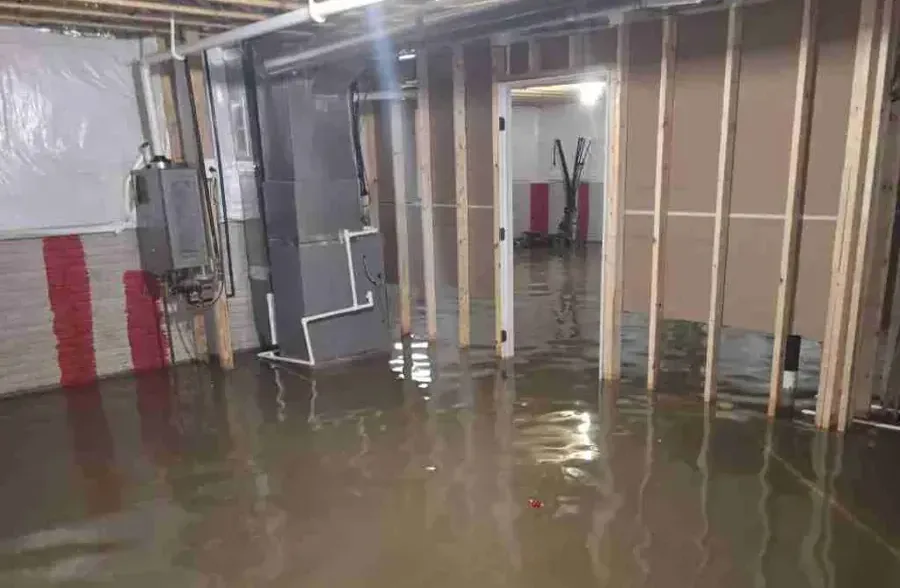
First steps for basement flooding cleanup
Stay off wet cords
Do not walk into a flooded basement with live outlets or appliances.
Shut off power if safe
Turn off the basement breakers from a dry spot.
Check the floor drain
Water rising from the drain means sewer water; keep everyone out.
Move contents up
Lift boxes and furniture off the floor if the water is clean.
The standard behind basement flooding cleanup
Rapid local response
Dispatch runs 24/7, and an active leak, flood or backup is treated as urgent on nights, weekends and holidays.
IICRC S500 drying standard
The drying team maps moisture first, sizes air movers and LGR dehumidifiers to the load and keeps them running until the readings say dry.
Claim-ready documentation
Timestamped photos, the moisture map and daily drying logs go into one file an adjuster can follow.
Skagit Valley water know-how
Crawl spaces, river floodplain lowlands, damp winter air and hard freezes all change how water moves through a house here.
What does basement flooding cleanup cost in Mount Vernon, WA?
Basement flooding cleanup here typically runs $2,500 to $15,000, depending on whether the basement is finished, how deep the water got and whether it came up through the floor drain as sewer water.
Unfinished basement, clean water
$2,500 to $5,000- Extraction from concrete
- Dehumidifiers and air movers
- Wall and floor readings
Finished basement, seepage water
$5,000 to $10,000- Carpet pad and flood cuts
- Wet insulation removed
- Framing dried open
Floor drain or sewer backup
$8,000 to $15,000+- Category 3 containment
- Porous materials removed
- Antimicrobial treatment
Ranges are typical, not a quote. Water category, square footage, material class and how fast drying started move the number most. The water damage cost calculator gives a planning range.
How basement flooding cleanup is handled, step by step
- 1
Find the entry point
Walls, drain or window well: the source sets the category.
- 2
Extract
Standing water comes off the concrete and out of the carpet.
- 3
Open wet walls
Flood cuts and insulation removal where finished walls wicked water.
- 4
Dry and verify
Dehumidifiers run until concrete and framing read dry.
Basements are less common here than crawl spaces, but plenty of older houses on the north hill and around Downtown have one, often a partial basement dug for a furnace or storage and later finished. Water gets in three ways: through the concrete walls when the soil is saturated, up through a floor drain when the sewer is overloaded, and through window wells that fill in a downpour.
Finished or unfinished changes the job
An unfinished basement with concrete walls and floor is mostly extraction and dehumidification. A finished basement adds drywall, carpet, insulation and trim that hold water.
- Carpet and pad on concrete: pad usually comes out, carpet saved only with clean water
- Drywall on furring strips: a flood cut a foot or two above the wet line when it wicked
- Rigid foam or fiberglass behind the drywall: removed if wet, then the wall dried open
- Stored boxes and contents: moved and photographed before anything is thrown out
Floor drain and sewer water
When water comes up through the floor drain, it is sewer water and Category 3. Parts of the older city sewer still carry storm water and sewage together, which is one reason heavy rain can push water up a basement drain. That loss is handled under containment, and the City of Mount Vernon public works pages are the place to report a backup from the city side. See sewage backup cleanup for that process.
Keeping the next storm out
Drying fixes the damage, not the cause. Gutters that dump at the foundation, grading that slopes toward the house and a failed sump pump bring the water back. Ready.gov lists simple flood-proofing steps such as backflow valves and raised utilities. A drainage contractor handles the exterior fix after the drying team has the basement dry.
Basement flooding cleanup across Mount Vernon and nearby towns
Drying crews cover ZIP 98273 and 98274, from Downtown and the west side river flats to Hillcrest, the Kulshan Creek and Maddox Creek neighborhoods, Little Mountain, Eaglemont and Skagit Highlands.
Coverage also reaches Burlington, Sedro-Woolley, La Conner, Conway, Big Lake, Bay View, Anacortes, Stanwood and Oak Harbor.
Related water damage services
Basement Flooding Cleanup questions, answered
Why does my basement flood when it rains hard?
Saturated soil pushes water through cracks and the joint where the floor meets the wall, window wells fill, and an overloaded sewer can push water up the floor drain.
Is basement water from the floor drain dangerous?
Yes. Water from a floor drain is sewer water and is Category 3, so the area is contained and porous materials it touched are removed.
Can a finished basement be saved after flooding?
Often the framing and much of the room can be. Wet pad, the lower drywall and insulation usually come out, and the walls are dried open before they are rebuilt.
How long does a basement take to dry?
Usually four to seven days. Concrete walls and floors give up water slowly, especially in cool damp weather.
Will a dehumidifier alone dry a flooded basement?
Not after a flood. Extraction comes first, then commercial dehumidifiers and air movers sized to the space, with readings to confirm the walls and floor are dry.
Does insurance cover a flooded basement?
Seepage and flooding are often excluded, and sewer backup usually needs its own endorsement. A sudden pipe burst is often covered. Check with your own insurer.
Basement taking on water? Get emergency water extraction started.
Water in a basement soaks carpet, drywall and insulation from the bottom up. The extraction crew pulls it out and the drying team dries the concrete and framing.