Water Heater Leak Cleanup in Mount Vernon, WA
A tank water heater holds 40 to 80 gallons and keeps refilling until the cold supply is shut off. The extraction crew pulls the water from the closet, garage or basement floor and dries the subfloor and walls around it.
(888) 509-1696Tank leaking on the floor? Get it cleared- Subfloor moisture readings
- Extraction and drying
- Claim photos of the tank
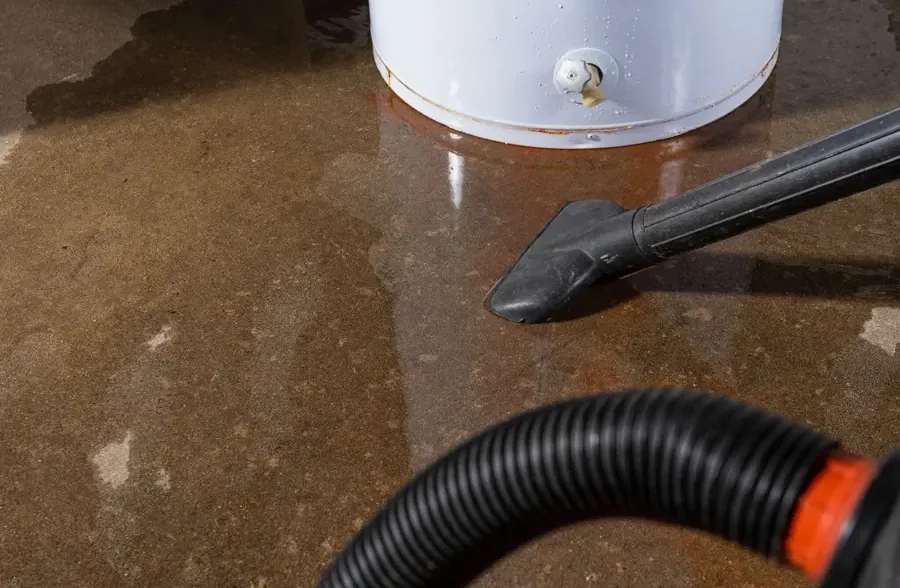
First steps for water heater leak cleanup
Close the cold supply
Turn the valve on the pipe above the tank, or shut the main.
Turn off the power or gas
Switch off the breaker, or set a gas heater to pilot or off.
Keep clear of hot water
Water near the tank can be scalding; let it cool.
Check below the floor
Look in the crawl space or basement under the heater.
The standard behind water heater leak cleanup
Rapid local response
Dispatch runs 24/7, and an active leak, flood or backup is treated as urgent on nights, weekends and holidays.
IICRC S500 drying standard
The drying team maps moisture first, sizes air movers and LGR dehumidifiers to the load and keeps them running until the readings say dry.
Claim-ready documentation
Timestamped photos, the moisture map and daily drying logs go into one file an adjuster can follow.
Skagit Valley water know-how
Crawl spaces, river floodplain lowlands, damp winter air and hard freezes all change how water moves through a house here.
What does water heater leak cleanup cost in Mount Vernon, WA?
Water heater leak cleanup here typically runs $1,200 to $5,500, depending on where the heater sits, how far the water spread and whether it soaked a wood subfloor, a finished basement or the ceiling below. The heater replacement is separate.
Garage tank on concrete
$1,200 to $2,000- Extraction from the floor
- Nearby drywall checked
- Air movers and a dehumidifier
Closet tank on a wood subfloor
$2,000 to $4,000- Baseboards and flooring lifted
- Crawl space checked
- Subfloor dried
Basement or upstairs tank
$3,500 to $5,500- Finished walls or ceiling opened
- Room below dried
- Daily readings for the claim
Ranges are typical, not a quote. Water category, square footage, material class and how fast drying started move the number most. The water damage cost calculator gives a planning range.
How water heater leak cleanup is handled, step by step
- 1
Confirm the shutoff
The supply is closed and the tank is safe before work starts.
- 2
Extract
Standing water comes off the floor and out of nearby carpet.
- 3
Check what is under it
Subfloor, crawl space or the ceiling below gets mapped.
- 4
Dry to the goal
Dehumidifiers and air movers until readings match a dry reference.
Water heaters fail in two ways. A tank that has rusted through leaks slowly at first and then lets go, and a valve, fitting or supply connector fails all at once. Either way, the tank keeps refilling from the cold supply, so the water runs until someone closes the valve on top of the heater or the main.
Where the heater sits decides the damage
Homes here put the water heater in a garage, a hall closet, a basement or a utility room, and each spot spreads water differently.
- Garage on a concrete floor: water runs out under the door and into the next room
- Interior closet over a wood subfloor: water soaks down into the crawl space
- Basement: water pools on concrete and wicks into finished walls
- Upstairs utility room: water drops through the ceiling of the room below
Cleanup and drying
The extraction crew pulls standing water, and the tech who does the walkthrough checks the subfloor and the crawl space under any interior closet, since that is where hidden water collects. Baseboards and wet pad come out where needed. The drying team sets dehumidifiers and air movers and logs readings until the subfloor and wall bottoms reach the drying goal.
A tank past its expected life is the usual cause. ENERGY STAR lists efficient replacement options, and the EPA WaterSense program covers checking for leaks around the house. A plumber installs the new heater; the restoration team handles the water.
When the leak reaches below
Water heaters in a closet or utility room on a wood floor often send water into the crawl space, where it sits on the vapor barrier. See crawl space water removal for that part of the job.
Water heater leak cleanup across Mount Vernon and nearby towns
Drying crews cover ZIP 98273 and 98274, from Downtown and the west side river flats to Hillcrest, the Kulshan Creek and Maddox Creek neighborhoods, Little Mountain, Eaglemont and Skagit Highlands.
Coverage also reaches Burlington, Sedro-Woolley, La Conner, Conway, Big Lake, Bay View, Anacortes, Stanwood and Oak Harbor.
Related water damage services
Water Heater Leak Cleanup questions, answered
How much water can a water heater leak?
The tank holds 40 to 80 gallons, but a failed fitting or tank keeps refilling from the cold supply until it is shut off, so the total can be far more.
Can I keep using hot water after the leak?
Not from that heater. Leave the supply and power or gas off until a plumber checks or replaces it.
Why check the crawl space after a water heater leak?
Heaters in closets and utility rooms on wood floors drain down through the subfloor, and that water collects on the vapor barrier out of sight.
Is a water heater leak covered by insurance?
The water damage from a sudden failure is often covered, while the heater itself usually is not. Coverage depends on your policy, so check with your own insurer.
How long does drying take after a water heater leak?
Usually three to five days. A wet subfloor or a finished basement wall adds time.
What are signs a water heater is about to fail?
Rust-colored hot water, rust or moisture at the base of the tank, popping or rumbling noises and a tank that is past its expected life.
Water heater flooding the floor? Get the drying started today.
A failed tank keeps refilling until the supply is shut, and the water runs into the subfloor and nearby rooms. The drying team pulls it out and dries what it reached.