Structural Drying and Dehumidification in Mount Vernon, WA
Wet framing, subfloor and plaster dry from the inside out, and damp winter air slows them down. The drying team sizes air movers and dehumidifiers to the load and keeps them running until the readings say dry.
(888) 509-1696Walls still wet inside? Dry them to S500- LGR and desiccant drying
- Psychrometric logs
- Dry reference readings
First steps for structural drying and dehumidification
Keep the house closed
Damp outdoor air slows drying; leave windows shut.
Leave the equipment on
Turning off air movers or dehumidifiers resets the progress.
Keep the heat steady
A normal indoor temperature helps the dehumidifiers work.
Stay off wet hardwood
Heavy traffic on wet boards can damage them further.
The standard behind structural drying and dehumidification
Rapid local response
Dispatch runs 24/7, and an active leak, flood or backup is treated as urgent on nights, weekends and holidays.
IICRC S500 drying standard
The drying team maps moisture first, sizes air movers and LGR dehumidifiers to the load and keeps them running until the readings say dry.
Claim-ready documentation
Timestamped photos, the moisture map and daily drying logs go into one file an adjuster can follow.
Skagit Valley water know-how
Crawl spaces, river floodplain lowlands, damp winter air and hard freezes all change how water moves through a house here.
What does structural drying and dehumidification cost in Mount Vernon, WA?
Structural drying here typically runs $1,200 to $7,500, depending on the class of loss, how many rooms are wet and whether dense materials like hardwood, plaster or crawl space framing need longer runs and desiccant equipment.
Drywall and carpet, 3 to 5 days
$1,200 to $2,800- Air movers and LGR dehumidifiers
- Daily moisture readings
- Psychrometric log
Hardwood or plaster
$2,800 to $5,000- Floor drying mats
- Longer equipment run
- Desiccant where needed
Crawl space framing and subfloor
$4,000 to $7,500- Dehumidifiers under the floor
- Joist and subfloor readings
- Containment of the crawl space
Ranges are typical, not a quote. Water category, square footage, material class and how fast drying started move the number most. The water damage cost calculator gives a planning range.
How structural drying and dehumidification is handled, step by step
- 1
Set the reference
A dry reference reading is taken in an unaffected part of the house.
- 2
Size the equipment
Air movers and dehumidifiers matched to each room's load.
- 3
Log daily
Moisture and psychrometric readings recorded every visit.
- 4
Pull at the goal
Equipment comes out when readings match the reference.
Structural drying is the part of the job that decides whether the damage stays fixed. Carpet and drywall surfaces dry fast, but studs, bottom plates, subfloor, plaster and hardwood hold water deep inside. If they are closed up wet, the result is swelling, odor and mold weeks later.
Drying in damp marine air
The outside air here is cool and close to saturated for much of the year, so opening windows rarely helps. The drying team closes the work area and controls the air inside it.
- Air movers sized to the evaporation load of each room
- LGR dehumidifiers that keep pulling water out of cool air
- Desiccant dehumidifiers for Class 4 materials and cold spaces
- Heat added where it speeds drying without damaging finishes
The National Weather Service Seattle office tracks the humidity and temperature that shape every dry-out, and the EPA indoor air quality pages explain the moisture targets that keep a home healthy.
Measured, not guessed
The tech who does the walkthrough takes a reading on a dry reference material in the same house, an unaffected wall or a joist in a dry room. Every wet material is measured against it daily, and the temperature and humidity in the drying area are recorded in a psychrometric log. Equipment comes out when the wet materials read within 2 to 4 points of that reference, not when the room looks dry.
Hardwood, plaster and crawl space framing
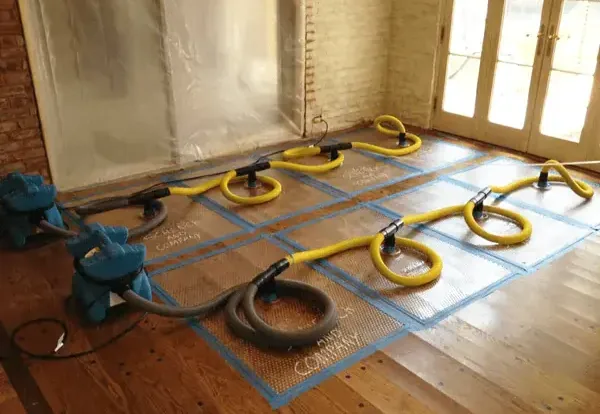
Dense materials are Class 4 losses. Hardwood floors get floor drying mats, plaster walls get longer runs and targeted airflow, and crawl space joists get dehumidifiers placed under the floor. See crawl space water removal and the drying time estimator for typical timelines.
Structural drying and dehumidification across Mount Vernon and nearby towns
Drying crews cover ZIP 98273 and 98274, from Downtown and the west side river flats to Hillcrest, the Kulshan Creek and Maddox Creek neighborhoods, Little Mountain, Eaglemont and Skagit Highlands.
Coverage also reaches Burlington, Sedro-Woolley, La Conner, Conway, Big Lake, Bay View, Anacortes, Stanwood and Oak Harbor.
Related water damage services
Structural Drying and Dehumidification questions, answered
Why is my house still being dried when it looks dry?
Surfaces dry first. Framing, subfloor and plaster hold water inside, and the readings show it is still there after the surface feels dry.
What does within 2 to 4 points of dry mean?
It means the wet material reads within 2 to 4 points of the same kind of material in a dry part of the house, the IICRC S500 way to confirm drying is done.
Why not just open the windows?
Outdoor air here is usually cool and damp, so it adds moisture. A closed room with dehumidifiers dries faster.
Can I turn off the equipment at night?
No. Drying runs around the clock, and turning equipment off lets moisture settle back into the materials.
How long does structural drying take?
Usually three to seven days. Hardwood, plaster and crawl space framing take the longest.
Does insurance pay for drying equipment?
When the water loss is covered, drying is usually part of the mitigation costs. The daily logs show the adjuster why each piece of equipment was there.
House still wet inside the walls? Get the drying started today.
Framing, subfloor and plaster hold water long after the surface looks dry. The drying team measures it daily and keeps the equipment on until it reaches the goal.