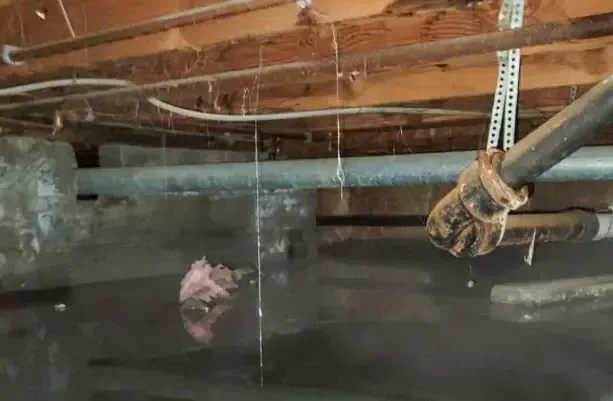
A crawl space hides water well. A homeowner may notice only a cold floor, a musty smell or a corner of insulation hanging down, while the joists above take on moisture day after day.
Key takeaways
- Standing water or soaked insulation under the floor needs action. A damp smell alone may only be humidity.
- If a pipe could be the source, shut off the water supply, and keep power off to anything wet under the house.
- Wet insulation and a soaked or torn vapor barrier are usually pulled out because they hold water against the wood.
- Joists and subfloor are dried in place when the water is caught early.
- Rain from October to March makes early fall the right time to look under the house.
Standing water or damp air: how to tell
Not every musty crawl space is flooded. The difference decides whether the answer is a pump and a dry out or a ventilation fix.
A flashlight from the access hatch tells most of the story. Look at the ground, the insulation and the underside of the floor before anything else.
Signs of standing water
- A shine or ripple on the soil, or a puddle in a low corner.
- Insulation sagging, dark or lying on the ground.
- Tide lines or wet stains on piers and foundation walls.
- Water dripping from a pipe, a drain or a floor above.
Signs of damp air only
- Beads of condensation on ductwork or cold water pipes.
- A musty smell with dry soil and dry insulation.
- A vapor barrier that is intact and lying flat.
- Cool, heavy air with no visible pooling.
Why older Mount Vernon homes take on crawl space water
Many homes built from the early 1900s to the 1950s, downtown and on the Hillcrest side, sit on crawl spaces or partial basements. The east hills subdivisions of Eaglemont and Skagit Highlands, built in the 1990s and 2000s, are still mostly crawl space framed.
The climate adds to it. Most of the rain falls from October to March in this marine setting, and a crawl space that stayed dry in summer can start collecting water with the first steady fall storms.
The usual sources are surface runoff pushed toward the foundation, a downspout that dumps beside the wall, a leaking supply pipe or drain, and soil that stays saturated. The crawl space water removal service starts with finding which of those is feeding the water.
Reading the clues: where the water came from
The pattern of the water points to the cause, and the cause decides the repair. A crew looks at timing, location and flow before touching anything.
A plumber and a restoration crew often work in the same space, so noting these clues helps both.
- Water that appears only after storms usually points to runoff, a downspout or a blocked drain outside.
- Water that is there in dry weather and keeps growing points to a supply pipe or drain leak.
- A wet patch directly under a bathroom, kitchen or water heater points to a fixture above.
- Water along one wall only suggests grading, a window well or a gutter on that side of the house.
- Soil that stays saturated for days after rain suggests the ground itself is holding water.
First steps before anyone crawls in
A flooded crawl space can hide live wiring and slick soil. The safe order is to stop the source, look from the hatch and then decide who goes in.
- Shut off the water supply to the house if a pipe may be leaking.
- Turn off power to the crawl space circuit at the panel if wiring or outlets are near the water.
- Do not step into standing water that touches wiring, a furnace or a water heater.
- Photograph the water, the insulation and any wet stains from the hatch.
- Check gutters and downspouts outside, and note where roof water lands.
What the crew removes first
Pumping the water out
Standing water is removed with pumps and a wet vacuum, working from the deepest point. This is the same water extraction step used inside a house, scaled to a tight space.
Pumping first keeps the water from soaking farther up into the joists and subfloor.
Insulation and the vapor barrier
Wet insulation stays heavy and holds water against the wood, so it is pulled out and bagged. A torn, soaked or bunched vapor barrier is cut out as well, because it traps moisture against the soil.
Once the space is clear, the crew can see the joists, the piers and the pipes, and look for the source.
- Insulation that fell or sagged is removed, not pushed back up.
- A vapor barrier that is torn or full of standing water is replaced after drying.
- Debris and silt are hauled out so the drying equipment can work on bare wood.
Drying the joists and subfloor
Wood that stayed wet for a short time dries well, and it is not replaced just because it was wet. The aim of structural drying is to bring joists and subfloor down to the dry standard, checked with a moisture meter.
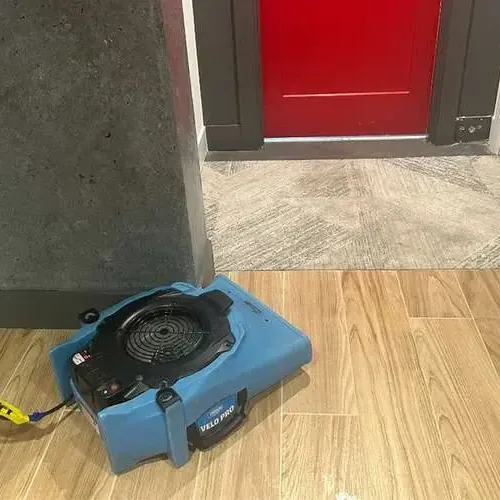
In a crawl space the work uses dehumidifiers and air movers set at the hatch or ducted in, because the air under a house is often saturated before the water ever arrives.
A thermal camera and moisture readings on the floor above show whether the water climbed into the finished floor, which can mean hardwood or flooring needs separate attention.
Keeping water out after the cleanup
A dry crawl space can fill again with the next storm unless the cause is addressed. Outside fixes are often simple and inexpensive compared with a second cleanup, and they protect the wood that was just dried.
- Extend downspouts so roof water lands well away from the foundation.
- Regrade soil so it slopes away from the walls.
- Keep vents and the access hatch clear and in good repair.
- Replace the vapor barrier and insulation only after the wood has dried.
- Look under the house after the first heavy rain of each season.
Questions
How can a homeowner tell a pipe leak from rain water under the house?
A pipe leak keeps adding water even in dry weather and often shows a drip or a wet patch under one fixture. Rain water arrives after storms and may show a trail from a vent, a wall or a low corner.
Is a damp crawl space the same as a flooded one?
No. Damp air leaves condensation and a musty smell, while a flooded space has pooled water, soaked insulation or wet soil that never drains. The first calls for ventilation and moisture control, the second for pumping and drying.
Do the joists have to be replaced after they get wet?
Usually not. Sound wood that is dried promptly can stay in place. Wood that is soft, cracked or crumbling is a sign of long term damage and is evaluated separately.
Can a homeowner pump out a crawl space alone?
A small puddle can be removed with a wet vacuum. Large amounts of water, wet insulation or any water near wiring or a furnace call for professional equipment and a safety check.
When is the best time to inspect a crawl space here?
Early fall, before the main rain season, and again after the first heavy storm. The wet months run from October to March, so problems tend to show then.