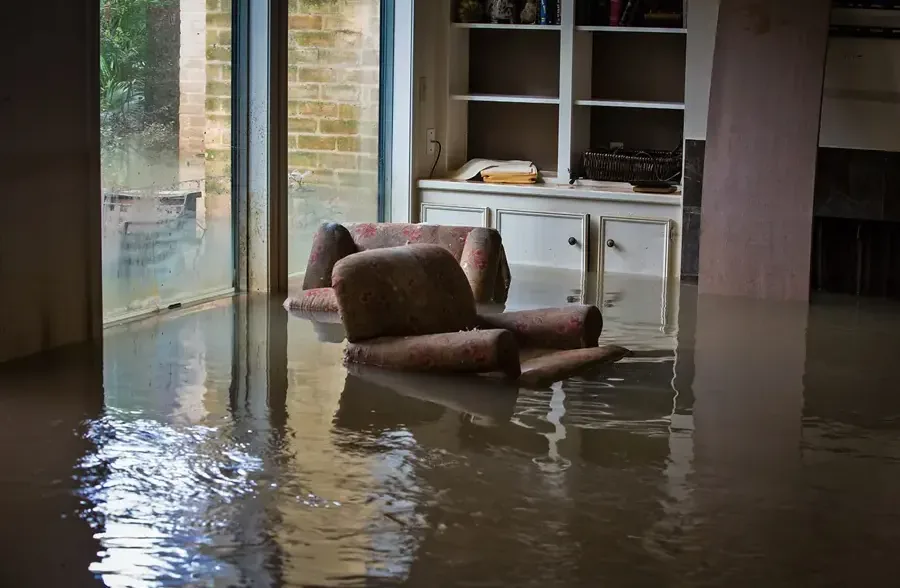
River water that gets inside a building is a different problem from a leaking pipe. It carries silt, runoff and sewage, and it soaks into everything it touches. The first day decides how much has to be torn out and how much can be dried and kept.
Key takeaways
- River flood water is treated as Category 3, grossly contaminated water, so protective gear comes before any cleanup.
- Keep power off in every wet area until an electrician has checked it, and stay out of standing water.
- Carpet, pad, insulation and soft drywall that touched river water are normally removed, not dried.
- Solid framing, concrete and many hard surfaces can be cleaned and dried in place.
- The Skagit River reached a record 37.73 feet on December 12, 2025, above the 37.4 feet of 1990, so past floods are no ceiling for the next one.
Why river water is handled differently
River water is not rain that came in the wrong door. On its way it picks up soil, fuel, fertilizer, animal waste and overflow from drains, so the industry treats it as Category 3, the most contaminated class.
That label changes the whole job. Porous materials that soak the water up cannot be made safe by drying alone, and the crew works in protective gear with containment set up where needed.
A flood response is its own service, and the flood water cleanup work follows a different order from a pipe leak repair.
What Category 3 changes in practice
The class sets the plan for every material in the room.
- Carpet, pad and insulation that were wet by river water are cut out and bagged.
- Drywall that wicked water upward is cut back above the visible stain.
- Hard surfaces are cleaned and treated before any drying equipment is set.
- Household fans stay off in contaminated rooms until the wet debris is out.
How it differs from a plumbing leak
A supply pipe leak starts as clean water and can often be dried in place when it is caught early.
River water starts dirty, so the same wet carpet that might be saved after a pipe leak becomes a loss after a flood.
What the Skagit River record means for local buildings
The Skagit River crested at 37.73 feet at 12:15 a.m. on December 12, 2025, the highest level on record. The earlier record was 37.4 feet in 1990, and the river also ran high in 1995 and 2003.
The downtown floodwall, finished in 2018, held at that crest. That is good news for the buildings behind it, but a wall does not close every route.
Storm drains can back up, sewer pipes can fill and low ground away from the wall can collect water while the river is high. Buildings in the river floodplain lowlands west of I-5 have a different exposure from the downtown core, so owners there need their own plan.
- 1990: the earlier record crest of 37.4 feet.
- 1995 and 2003: two more Skagit River floods.
- 2018: the downtown floodwall was finished.
- December 12, 2025: a new record of 37.73 feet, with the floodwall holding.
The first hours: safety before cleanup
Water that is still standing in a house hides hazards. Outlets, extension cords and appliances can energize it, and the floor underneath may be slick with silt.
Safety steps come before any attempt to save belongings.
- Shut off power at the main panel only if it can be reached without stepping in water.
- Wear rubber boots, waterproof gloves and eye protection before entering a wet room.
- Keep children and pets out until the water is gone and the floor has been cleaned.
- Do not run a household vacuum or a space heater in wet rooms.
- Photograph the high water mark on the walls and the contents before moving anything.
Pulling the standing water out
Once a space is safe to enter, removing the standing water comes first. Water extraction with pumps and extractors pulls the bulk of it out before it wicks into the walls and subfloor.
Speed matters because each extra day that framing stays wet adds to the swelling and staining. The crew works from the lowest point of the floor outward and checks under cabinets and kickplates where water hides.
Mud and silt are shoveled and hauled out, then the floor is washed down so the drying equipment is not working over a layer of dirt.
What comes out and what stays
The crew sorts materials into two groups, and the sorting is done with moisture readings in hand, not by looks alone.
Materials normally removed
These soak up contaminated water and cannot be cleaned deeply enough to keep.
- Wall to wall carpet and carpet pad.
- Batt insulation in wet wall bays.
- Drywall that wicked water above the floor.
- Particleboard cabinets, mattresses and upholstered furniture.
Materials usually cleaned and kept
These can be washed, treated and dried in place.
- Solid wood framing and subfloor, once cleaned and dried.
- Concrete slabs and block foundation walls.
- Metal, glass and many plastic items.
- Solid wood furniture that has not warped.
How the dry out is done
After the wet debris is gone, the structural drying stage begins. The goal is for framing and subfloor to reach the dry standard for that material, and the crew confirms it with meters instead of guessing.
Equipment and monitoring
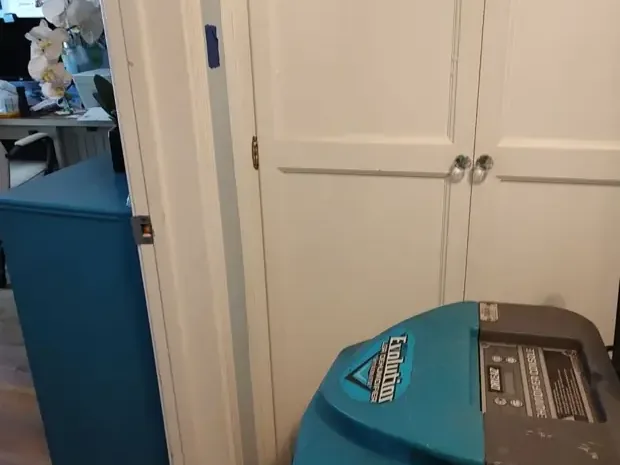
Fans move air across the surfaces while dehumidifiers pull moisture out of that air. A thermal camera and pin meters locate wet spots hidden behind finished walls.
Readings are taken each day and the equipment is moved to where the numbers are still high.
How long it takes
A typical dry out takes several days, and a flood that soaked wall cavities or a lower level can take longer. Damp marine air slows the work, so each day's readings decide when the equipment comes out.
After the water leaves: records and watch points
A flooded building needs paperwork as much as pumps. Notes taken on the first day make the claim process smoother later.
- Time stamped photos of the high water mark, each room and every discarded item.
- A written list of removed contents with rough ages and values.
- Moisture readings and equipment logs from the crew.
- Receipts for protective gear, storage and temporary housing.
Questions
Is river flood water in a house dangerous to touch?
Yes. It can carry bacteria, chemicals and sewage, so skin contact and splashes near the face are avoided. Rubber boots, waterproof gloves and eye protection are the minimum for entering.
Can carpet that got wet from a river flood be saved?
Almost never. Carpet and pad hold contaminated water and cannot be made safe by drying alone, so they are removed and the floor beneath is cleaned and dried.
Does the downtown floodwall mean a building there cannot take on water?
No. The floodwall held at the record 2025 crest, but water can still arrive through storm drains, sewer backups, roof leaks or low ground away from the wall. A building behind a wall can still need drying.
How soon should drying start after a flood?
As soon as the standing water is out and the space is safe. Wet framing and subfloor start to swell and stain within 24 to 48 hours, so waiting only adds to what has to be replaced.
When is it safe to turn the power back on?
Only after an electrician checks the wiring, outlets and panel for water damage. A building that sat in river water can have corroded connections that look fine from the outside.