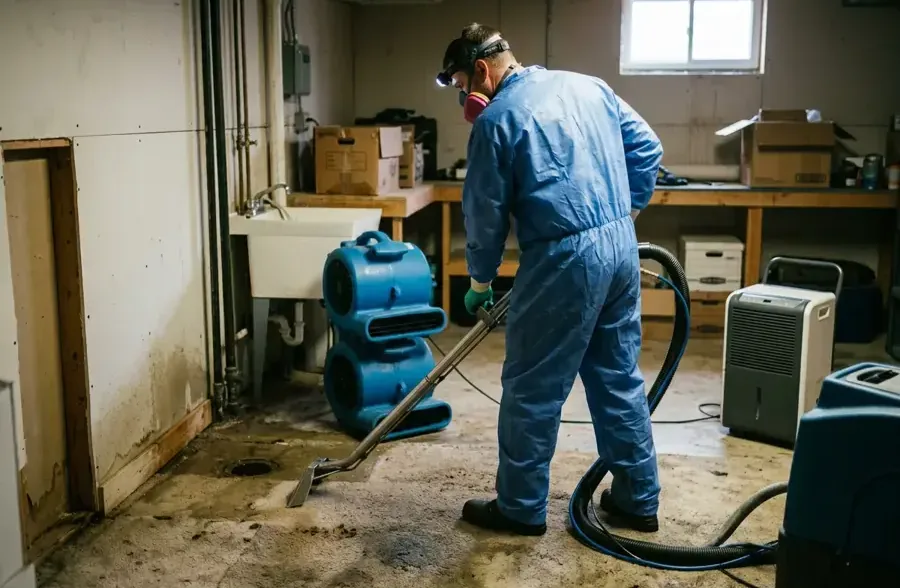
A sewage backup raises three questions at once: where is the blockage, who maintains that part of the sewer, and who cleans up the contaminated water. The city answers the first two in part, and the third falls to a crew trained for Category 3 water.
Key takeaways
- The city says homeowners are responsible for sewer backup problems on their side sewer, including the connection to the main.
- A resident can ask the Streets and Utilities department to inspect and clean the city main beside the side sewer, which shows whether the blockage is in the main or the side sewer.
- Anacortes has a combined sewer system, and wet weather can overload it and push sewage back toward homes.
- Sewage is Category 3 water. Porous materials it touches are removed, and the area is cleaned and dried.
- Notes and photos of the backup help the city, the plumber and the cleanup crew work from the same facts.
Three questions after a backup
When toilets gurgle, a floor drain overflows or a basement sink fills with dirty water, the first reaction is to find someone to blame. A better approach is to answer three separate questions.
The answers point to who needs to be called and in what order.
- Where is the blockage: in the side sewer, in the city main or somewhere in the house plumbing?
- Who maintains the part where the blockage sits?
- Who removes the sewage and dries what it touched?
The side sewer and the city main: what the city says
The side sewer is the pipe that carries waste from a building to the main in the street. The City of Anacortes says homeowners are responsible for sewer backup problems on their side sewer, including the connection to the main.
There is a useful option for finding out where the problem sits. A resident with a backup can ask the city's Streets and Utilities department to inspect and clean the city sewer main next to the side sewer.
If the main is clear, the blockage is likely on the private side. If the main is blocked, the blockage is in the city main.
What a homeowner can gather first
- Which drains and fixtures backed up, and in what order.
- Whether neighbors have the same problem.
- The time the backup began and whether it was raining.
- Photos of the water and any damage.
Why wet weather matters in a combined sewer system
Anacortes has a combined sewer system, which carries storm water and sewage in the same pipes. Its discharge permit lists two combined sewer overflow locations.
The city has had sanitary sewer overflows in wet weather when overflow volumes exceed what the system can hold, and they happen almost as often as combined sewer overflow events. A heavy rain, then, can push water the wrong way.
A combined sewer overflow pump station is being built at the wastewater treatment plant, with construction scheduled from May 2026 to November 2026. The city describes it as a way to prevent sanitary sewer overflows, not to change how often combined overflows occur.
Sewage is Category 3 water: safety first
Sewage carries bacteria, viruses and parasites. It is the most contaminated class of water, and it is handled with protective gear, containment and careful disposal.
- Keep children, pets and anyone with a weak immune system out of the area.
- Do not wade through it barefoot or use bare hands.
- Stop using sinks, tubs and toilets until the backup is cleared.
- Turn off power to wet outlets and appliances if it can be done safely.
- Do not try to clean it with a household mop or vacuum.
What a sewage cleanup involves
Removing the water and the solids
A crew extracts the contaminated water and removes solids with pumps and tools made for the job. Water extraction is followed by hauling and disposing of what was removed in a way that keeps it out of clean areas.
Removing porous materials
Carpet, pad, insulation and drywall that were soaked are cut out and bagged. These materials cannot be made safe by cleaning, because the contamination soaks deep.
Cleaning, antimicrobial treatment and drying
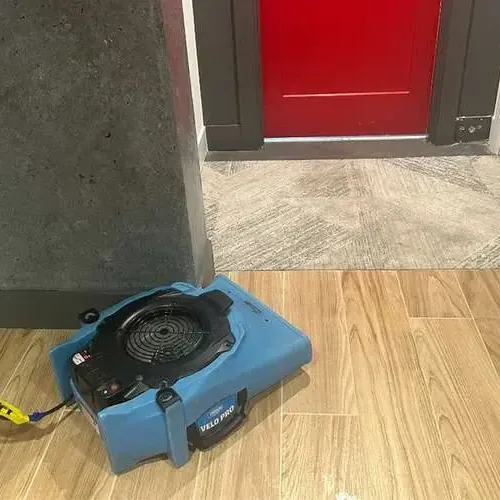
Hard surfaces and framing are cleaned and treated with an antimicrobial. The sewage backup cleanup process then moves to structural drying until readings meet the dry standard.
Habits that lower the risk of a repeat backup
No habit makes a sewer immune, especially in wet weather. A few simple practices still lower the chance of a blockage in the side sewer.
Where a backup does recur, a plumber can camera inspect the side sewer and show what is wrong. The cleanup side is covered by the sewage backup response for the wider area, which follows the same safety steps.
- Keep grease, wipes and paper towels out of toilets and drains.
- Know where the cleanout and the main shutoff are before a problem starts.
- Keep valuables and stored boxes off basement floors and floor drains.
- Watch for slow drains, gurgling and odors, which often come before a backup.
- After a heavy rain, check low drains and the lowest floor.
Information to gather before calling
Whoever is called first, the same facts help. A short list prepared early saves time and avoids duplicate work.
- Photos of the backup, the drains involved and the affected rooms.
- The time the problem began and any recent heavy rain or storms.
- Whether other fixtures, such as a sink, tub or floor drain, were affected.
- Notes of every person contacted, and the date and time of each call.
- A list of damaged items and flooring.
Questions
Who is responsible for a sewer backup in Anacortes?
The city says homeowners are responsible for sewer backup problems on their side sewer, including the connection to the main. The city's Streets and Utilities department can inspect and clean the city sewer main.
How can a homeowner tell if the blockage is in the main or the side sewer?
A resident can ask the Streets and Utilities department to inspect and clean the city main next to the side sewer. The result shows whether the blockage is in the main or in the side sewer.
Why do sewers back up in heavy rain here?
The city has a combined sewer system, and in wet weather overflow volumes can exceed system capacity, which causes sanitary sewer overflows. Rain can push water back toward low drains.
Can a homeowner clean up sewage without a crew?
Small spills on hard floors can be handled with care and protective gear, but a backup that soaked carpet, drywall or insulation needs professional cleanup, because contaminated materials must be removed and the area dried.
Does the new pump station prevent every backup?
No. The city describes it as a way to prevent sanitary sewer overflows at the treatment plant. A backup inside a home can have other causes, such as a blocked side sewer, so a homeowner should still know the cleanup steps.