Structural Drying and Dehumidification in Anacortes
After a storm surge, a pipe loss or a freeze, a building still holds water in its walls and floors. Structural drying removes it with equipment and daily readings, and the readings decide when the job is done.
(888) 509-1696Call about drying equipment- Air movers and dehumidifiers
- Daily moisture readings
- Psychrometric log
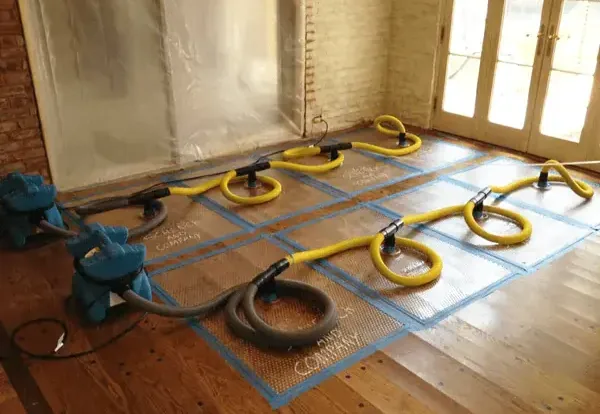
First steps for structural drying and dehumidification
Confirm extraction
Standing water is removed before equipment is placed.
Place equipment
Air movers and dehumidifiers are matched to the wet areas.
Read daily
Meter and humidity readings track every material.
Adjust and remove
Equipment moves as areas dry and leaves at the dry standard.
The standard behind structural drying and dehumidification
Rapid local response
Dispatch runs 24/7, and an active leak, flood or backup is treated as urgent on nights, weekends and holidays.
IICRC S500 drying standard
The drying team maps moisture first, sizes air movers and LGR dehumidifiers to the load and keeps them running until the readings say dry.
Claim-ready documentation
Timestamped photos, the moisture map and daily drying logs go into one file an adjuster can follow.
Skagit Valley water know-how
Crawl spaces, river floodplain lowlands, damp winter air and hard freezes all change how water moves through a house here.
What does structural drying and dehumidification cost in Anacortes, WA?
Structural drying usually runs about $1,200 to $2,800 for drywall and carpet over several days, $2,800 to $5,000 for hardwood or plaster, and $4,000 to $7,500 for crawl space framing and subfloor.
Drywall and carpet, a few days
$1,200 to $2,800- Air movers and LGR units
- Daily moisture readings
- A psychrometric log kept
Hardwood or plaster
$2,800 to $5,000- Drying mats on floors
- A longer equipment run
- Desiccant where needed
Crawl space framing and subfloor
$4,000 to $7,500- Dehumidifiers below the floor
- Joist and subfloor readings
- The crawl space contained
Ranges are typical, not a quote. Water category, square footage, material class and how fast drying started move the number most. The water damage cost calculator gives a planning range.
How structural drying and dehumidification is handled, step by step
- 1
Map it
Meters sketch which materials are wet and set the targets.
- 2
Place it
Equipment goes where the readings are highest.
- 3
Read it
Daily readings show how fast each material dries.
- 4
Finish it
Equipment leaves when every reading is at the dry standard.
Drying is a measured process, not a guess. After water is pumped out, a structure in Anacortes can still hold moisture in drywall, framing, subfloor and flooring, and the city warns that flood water may be contaminated, so the plan depends on the source.
How the equipment works
Air movers push dry air across wet surfaces so water leaves the material. Dehumidifiers pull that moisture out of the air and keep the room dry enough to take more. The two run together, and a meter checks the framing and drywall each day. Warm air carries more moisture away from surfaces, so temperature is tracked too.
- Air movers placed across wet surfaces
- LGR dehumidifiers matched to room volume
- Moisture meters and daily readings
- Temperature and humidity logged
What the readings decide
A moisture map compares wet materials with dry reference points from the same house. Equipment is adjusted as materials dry. The job ends when every reading matches the dry standard, not on a set number of days.
- Drywall and carpet dry fastest
- Hardwood and plaster take longer
- Framing and subfloor in crawl spaces need dehumidifiers below the floor
- Desiccant units help in damp air
When drying starts and stops
Drying follows extraction and removal. Equipment runs inside containment when the water was contaminated. Each visit adds a reading, so the file shows the drying curve from the first day to the last. Work after a flood is in flood water cleanup, and pumping is in water extraction.
Structural drying and dehumidification across Anacortes and nearby towns
Drying equipment goes to Anacortes properties across the city, from Skyline to the Commercial Avenue corridor, and it runs until the readings show every material is dry.
The same service nearby: structural drying and dehumidification in Mount Vernon, Oak Harbor, Burlington.
Related water damage services in Anacortes
Structural Drying and Dehumidification questions, answered
How long does structural drying take?
Drywall and carpet can dry in a few days, while hardwood, plaster and framing take longer, and the readings decide the finish.
Why dehumidifiers and air movers together?
Air movers lift moisture from surfaces, and dehumidifiers remove it from the air, so each one limits what the other can do alone.
What is a dry standard?
It is the moisture level of the same material in an unaffected part of the house, and the readings must match it.
Why do readings continue daily?
Daily readings show whether equipment is working and let technicians move it where moisture lingers, which keeps the job from running long.
Can equipment run without readings?
It can, but there is no way to know when to stop, so the job runs long or ends while framing is still wet.
Does drying replace removal?
No. Materials that cannot be dried or may be contaminated are removed first, and drying handles the structure that remains.
Walls wet? Call dispatch
Dispatch answers around the clock, sets equipment by the readings and keeps the daily logs and the moisture map that the insurance file depends on, from placement to removal.