Structural Drying and Dehumidification in Burlington, WA
Water that looks gone is often still inside framing, subfloors and drywall. Structural drying uses air movers and dehumidifiers, and daily readings decide when the equipment can leave and the rebuild can start.
(888) 509-1696Walls still wet? Set up the drying plan- LGR dehumidifiers
- Daily psychrometric readings
- Drying mats
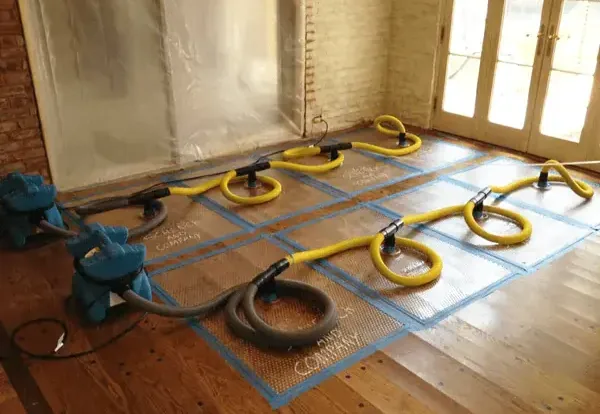
First steps for structural drying and dehumidification
Keep doors closed
Closed rooms let dehumidifiers work. Open windows add humid air.
Leave equipment on
Fans and dehumidifiers run day and night until the readings clear.
Move wet contents
Lift furniture and boxes off wet floors so air reaches the material underneath.
Watch the readings
Ask to see the log each day.
The standard behind structural drying and dehumidification
Rapid local response
Dispatch runs 24/7, and an active leak, flood or backup is treated as urgent on nights, weekends and holidays.
IICRC S500 drying standard
The drying team maps moisture first, sizes air movers and LGR dehumidifiers to the load and keeps them running until the readings say dry.
Claim-ready documentation
Timestamped photos, the moisture map and daily drying logs go into one file an adjuster can follow.
Skagit Valley water know-how
Crawl spaces, river floodplain lowlands, damp winter air and hard freezes all change how water moves through a house here.
What does structural drying and dehumidification cost in Burlington, WA?
Drywall and carpet drying runs $1,200 to $2,800 over three to five days. Hardwood or plaster runs $2,800 to $5,000, and framing and subfloor in a crawl space runs $4,000 to $7,500.
Drywall and carpet
$1,200 to $2,800- LGR dehumidifiers
- Air movers placed on the wet areas
- Daily psychrometric log
Hardwood or plaster
$2,800 to $5,000- Floor drying mats
- Longer equipment run
- Desiccant if needed
Crawl space framing
$4,000 to $7,500- Machines below the floor
- Joist readings
- Crawl space contained
Ranges are typical, not a quote. Water category, square footage, material class and how fast drying started move the number most. The water damage cost calculator gives a planning range.
How structural drying and dehumidification is handled, step by step
- 1
Measure it
Meters and a psychrometer set the starting readings.
- 2
Place it
Air movers and dehumidifiers go where the water traveled.
- 3
Run it
Equipment stays on while readings are taken each day.
- 4
Prove it
Readings reach the dry goal and the equipment is removed.
Extraction takes out the water you can see. Drying takes out the water you cannot. After floodwater reached Burlington homes near Gages Slough on December 12, 2025, the buildings needed days of controlled drying, not just a pump-out.
How drying is measured
Drying comes down to three numbers: the moisture in materials, the humidity of the air and the temperature. Meters and a psychrometer log them daily, and the IICRC S500 standard supplies the drying goal the crew works toward.
- Moisture meters on framing and subfloors
- Thermal imaging for hidden wet spots
- Hygrometers for air temperature and humidity
- A written daily log of every reading
The log is what the insurer and the owner can follow.
Equipment, placed on purpose
Air movers push dry air across wet surfaces, and low-grain refrigerant dehumidifiers pull the moisture out of the air. Hardwood gets drying mats, plaster may need desiccant, and crawl spaces get equipment set below the floor. More machines do not dry faster if airflow is wrong.
- Hardwood: mats pull water from boards
- Plaster: longer runs and desiccant
- Crawl space: dehumidifiers under the floor
- Drywall and carpet: three to five days
Drying after floodwater
Because floodwater can be contaminated and can hide other hazards, as Skagit County warned, contaminated materials come out before any drying begins. Once the remaining structure is clean, the equipment runs until the framing reaches the goal. Flood water cleanup covers the earlier steps, and water extraction covers the bulk removal.
Structural drying and dehumidification across Burlington and nearby towns
Drying equipment goes out across ZIP 98233, from the Gages Slough area and Downtown to Hill Vue Place, the north end, the Skagit Country Club area and the interchange area.
The same service nearby: structural drying and dehumidification in Mount Vernon, Sedro-Woolley, Anacortes.
Related water damage services in Burlington
Structural Drying and Dehumidification questions, answered
How do you know the structure is dry?
Moisture readings on framing, subfloor and drywall are compared with a dry reference from an unaffected area of the same material. Equipment stays until the numbers match.
Why not just use fans?
Fans move moist air around, but they do not remove it. Dehumidifiers pull water from the air so the materials can release more, which is what actually dries a structure.
Are the noise and heat normal?
Yes. Dehumidifiers warm the room and equipment can be loud, and both are signs the system is working. Running it continuously is how the dry-out finishes sooner.
Can the equipment be removed early?
Doing so risks leaving moisture in framing, which can lead to odors, warped floors and mold. The readings decide the date, not the calendar.
Does the electric bill go up?
Running drying equipment does use power, and some insurers consider it in the claim. The crew's log of equipment and run time supports that part of the file.
What if materials will not dry?
Some materials, such as soaked particleboard or insulation, cannot be dried reliably and are removed instead. The readings and a visual check make that call.
Dry it to the goal
Moisture left behind in framing and floors keeps causing damage after the water is gone. A call sets up the equipment, the daily readings and the log the claim needs.