Structural Drying and Dehumidification in Sedro-Woolley
When the water is gone, the structure still holds it. Crews place air movers and dehumidifiers, read walls, floors and framing every visit and keep the equipment running until each material reaches its drying goal.
(888) 509-1696Start the drying plan- LGR dehumidifiers
- Daily moisture readings
- Psychrometric log
First steps for structural drying and dehumidification
Stop adding moisture
Fix the source and keep wet laundry and steam out of the area.
Close the space
Keep windows and exterior doors shut so dehumidifiers work efficiently.
Leave equipment alone
Do not move or switch off the machines.
Note the noise and heat
Expect warm air and steady hum, which are normal while drying.
The standard behind structural drying and dehumidification
Rapid local response
Dispatch runs 24/7, and an active leak, flood or backup is treated as urgent on nights, weekends and holidays.
IICRC S500 drying standard
The drying team maps moisture first, sizes air movers and LGR dehumidifiers to the load and keeps them running until the readings say dry.
Claim-ready documentation
Timestamped photos, the moisture map and daily drying logs go into one file an adjuster can follow.
Skagit Valley water know-how
Crawl spaces, river floodplain lowlands, damp winter air and hard freezes all change how water moves through a house here.
What does structural drying and dehumidification cost in Sedro-Woolley, WA?
Drying cost depends on the materials, how much area is wet and how long the equipment must run. Drywall and carpet dry faster than hardwood or crawl space framing, which sit higher in the tiers.
Drywall and carpet, short run
$1,200 to $2,800- Air movers and dehumidifiers
- Daily readings
- Psychrometric log
Hardwood or plaster
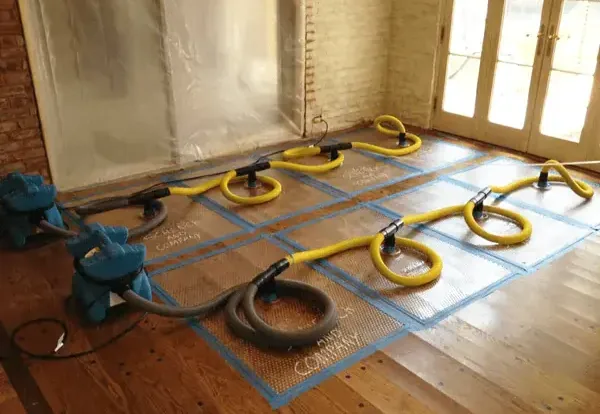
$2,800 to $5,000- Drying mats on floors
- Longer equipment run
- Desiccant when needed
Crawl space framing and subfloor
$4,000 to $7,500- Dehumidifiers below the floor
- Joist and subfloor readings
- Crawl space contained
Ranges are typical, not a quote. Water category, square footage, material class and how fast drying started move the number most. The water damage cost calculator gives a planning range.
How structural drying and dehumidification is handled, step by step
- 1
Map
Take readings to mark every wet area, surface and material.
- 2
Place
Set air movers and dehumidifiers by the room layout, the material and the amount of water.
- 3
Read
Log air and material readings at every visit.
- 4
Release
Remove equipment once readings meet the drying goal.
Standing water is the part of a loss that people see. The part that causes trouble later is the moisture left in drywall, subfloor and framing, which can sit unnoticed behind finished surfaces long after the floor looks dry.
Why local conditions matter
River and creek flooding, plus a wet Skagit County winter, leave framing and finishes damp in ways that surface checks miss. Outdoor air is often as humid as the room, so a closed system with dehumidifiers dries more reliably than open windows and fans.
Finished surfaces hide the problem. Paint, vinyl and baseboards keep moisture in, so a wall can read wet inside while looking fine outside, which is why meter readings count for more than appearance or touch.
How the equipment works together
Air movers push dry air across wet surfaces, and low grain refrigerant dehumidifiers pull the released moisture out of the room. Neither does the job alone, and the ratio changes by material.
- Drywall and carpet dry fastest with steady airflow
- Hardwood needs drying mats and a gentler schedule
- Plaster and thick framing may call for desiccant units
- Crawl spaces get dehumidifiers beneath the floor
Daily readings, then the sign-off
Temperature, humidity and material readings are written down each visit, and equipment is moved or removed as areas dry. The log is the proof for an adjuster that the drying goal was met. See water extraction for the step before drying and flood water cleanup for river water losses.
Structural drying and dehumidification across Sedro-Woolley and nearby towns
Drying crews work across ZIP 98284, from the downtown buildings near Hammer Heritage Square to the Brickyard Meadows homes, the Fruitdale Road corridor and the Northern State campus side.
The same service nearby: structural drying and dehumidification in Mount Vernon, Burlington, Anacortes.
Water damage restoration in Sedro-Woolley · every town covered
Related water damage services in Sedro-Woolley
Structural Drying and Dehumidification questions, answered
How is drying measured?
Moisture meters and psychrometric readings of air temperature and humidity are logged at each visit, and equipment comes off when materials reach their drying goal.
Why not just run fans?
Fans move air but do not remove moisture from it. Dehumidifiers pull the water out of the air so the structure can keep releasing it.
Do wet walls always need to be opened?
Not always. Small openings or baseboard removal let air in, and meters decide whether a larger cut is needed.
Why does hardwood take longer?
Wood absorbs water slowly and releases it slowly. Drying mats and a gentle schedule protect the boards from cupping.
Can the equipment be removed early?
Only when readings reach the drying goal. Pulling it sooner leaves hidden dampness that can lead to odor and decay.
Does Skagit County weather affect drying?
Wet winters mean damp outdoor air, so closed-up drying with dehumidifiers works better than opening windows.
Dry materials are the real finish
Report the loss and a crew can place air movers and dehumidifiers, take daily readings and remove equipment when the structure is dry.