Water Extraction and Removal in Burlington, WA
Every hour that water sits, it wicks further into carpet, pad and baseboards. Extraction pulls the bulk of it out with pumps and wands, then moisture meters show how much is still hiding.
(888) 509-1696Standing water inside? Book the extraction crew- Truck-mounted extraction
- Pad and subfloor checks
- Moisture map
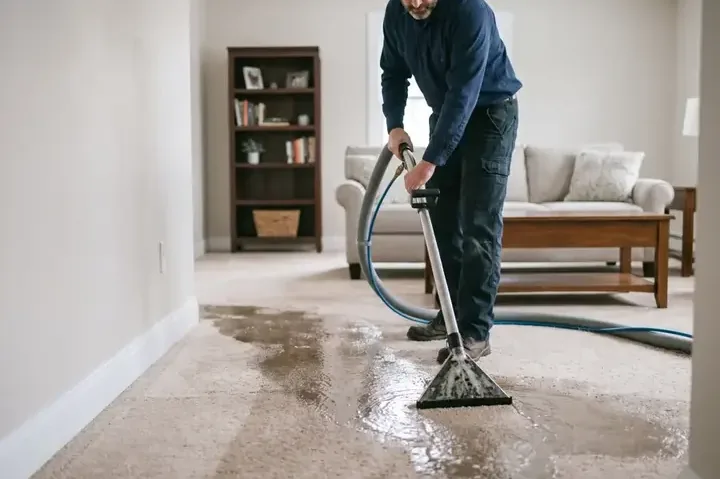
First steps for water extraction and removal
Stop the source
Close the valve if a pipe or hose is the cause. With floodwater, stay out until it is safe.
Move the easy things
Lift rugs, electronics and furniture legs onto dry surfaces.
Skip the household vacuum
It is not built for standing water and risks a shock. Wait for proper extraction gear.
Take photos
Capture the water height, wet carpet and damaged contents before the crew starts.
The standard behind water extraction and removal
Rapid local response
Dispatch runs 24/7, and an active leak, flood or backup is treated as urgent on nights, weekends and holidays.
IICRC S500 drying standard
The drying team maps moisture first, sizes air movers and LGR dehumidifiers to the load and keeps them running until the readings say dry.
Claim-ready documentation
Timestamped photos, the moisture map and daily drying logs go into one file an adjuster can follow.
Skagit Valley water know-how
Crawl spaces, river floodplain lowlands, damp winter air and hard freezes all change how water moves through a house here.
What does water extraction and removal cost in Burlington, WA?
Extraction alone runs $600 to $1,500 for one room of carpet and $1,500 to $3,000 for several rooms or a hallway. Hard floors with pad removal run $2,500 to $4,000.
One room of wet carpet
$600 to $1,500- Wand and truck extraction
- Pad tested with meters
- Air movers started
A hallway or several rooms
$1,500 to $3,000- Extraction in every room
- Moisture map for the file
- Dehumidifier placed
Hardwood or pad removal
$2,500 to $4,000- Drying mats on wood
- Wet pad bagged out
- Wet baseboards pulled
Ranges are typical, not a quote. Water category, square footage, material class and how fast drying started move the number most. The water damage cost calculator gives a planning range.
How water extraction and removal is handled, step by step
- 1
Size it up
Surfaces are tested and the water is sorted by type.
- 2
Pull it out
Pumps and wands remove the bulk water from every wet room.
- 3
Check beneath
Meters find water left in pad, subfloor and wall bases.
- 4
Set the dry-out
Air movers and dehumidifiers go where the map points.
Extraction decides how big a water loss becomes. In Burlington the clearest example is December 12, 2025, when Gages Slough overflowed into homes and the standing water had to come out before anything else could be judged.
What extraction actually does
Submersible pumps clear deep water first. Wands and truck-mounted units then pull moisture out of carpet, pad and hard floors, working in overlapping passes so water left behind does not wick into wall bases and subfloor seams.
- Carpet lifted and pad tested with meters
- Hardwood and laminate checked for trapped water
- Baseboards removed where water got behind them
- A moisture map marking every wet surface
That map becomes the plan for the drying equipment.
When the water is not clean
Skagit County warns that floodwater can be contaminated and can hide hazards, so extraction after a flood follows stricter handling than a supply hose leak, the same approach used in flood water cleanup. Crews wear protective gear, bag affected pad and keep dirty water out of dry rooms.
- Clean water: carpet and pad can often be saved
- Gray water: more material comes out
- Floodwater and sewage: porous materials removed
- Water type decides the scope, not the depth
Extraction in Burlington homes
Cascadia Daily News reported that between 55 and 60 homes flooded when Gages Slough overflowed on December 12. A household facing the same situation should expect extraction to start while the building is still wet, followed by structural drying once the bulk water is gone.
Water extraction and removal across Burlington and nearby towns
Extraction crews work ZIP 98233 from Downtown and the Fairhaven Avenue corridor to Hill Vue Place, the hill to the north and the Skagit Country Club area.
The same service nearby: water extraction and removal in Mount Vernon, Sedro-Woolley, Anacortes.
Related water damage services in Burlington
Water Extraction and Removal questions, answered
How much water can extraction remove?
Pumps and truck-mounted units remove most standing and bulk water. What remains inside pad, wood and drywall is handled by drying equipment, because extraction cannot pull out every trace.
Do carpets have to be thrown out?
Not always. Carpet from a clean water leak can often be extracted and dried in place. Carpet that sat in floodwater or sewage is removed along with its pad.
Why are moisture meters used after extraction?
A floor can look and feel dry while the pad or subfloor beneath still holds water. Meters and thermal images show what the eye misses and record it for the claim.
What is different about floodwater?
Floodwater can be contaminated and can hide debris or electrical hazards, as Skagit County warned in December 2025. Extraction then includes protective gear, careful disposal and removal of porous materials.
Can extraction start before the rain stops?
Yes, when the building is safe to enter. Removing standing water early limits how far it wicks into walls, and the plan can change if more water arrives.
Does extraction replace drying?
No. Extraction takes out bulk water, and structural drying removes the moisture left in materials. Skipping the second step leaves wet framing that can lead to odors and mold.
Get the water out of the floors
Water that sits keeps traveling into carpet pad, baseboards and subfloor. Calling early gives the extraction a smaller job and the claim cleaner records.