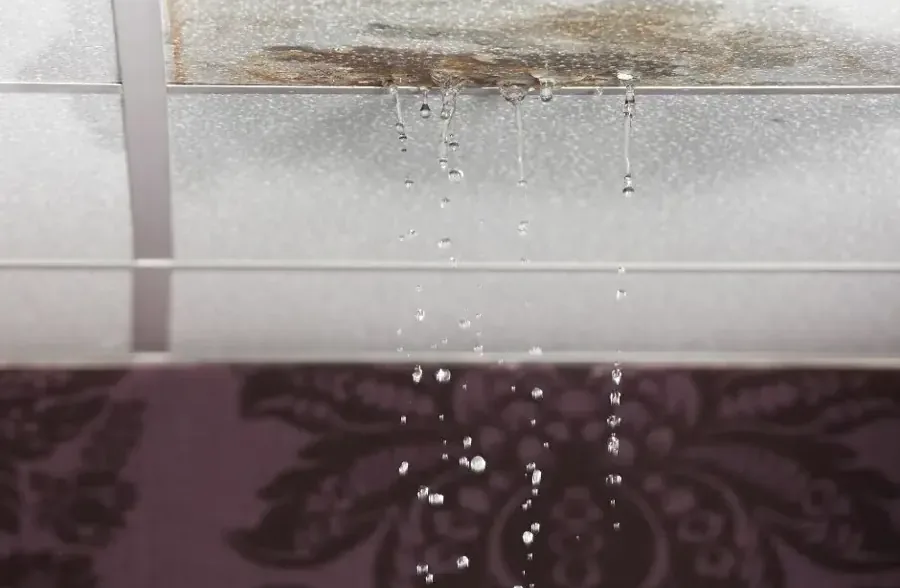
A storm that pushes rain sideways finds every weak spot on a roof. The leak often shows up hours later as a stain on a ceiling, while the wet insulation above it keeps holding water.
Key takeaways
- Wind driven rain gets in at flashing, vents, ridge caps and worn shingles, often far from where the ceiling stain appears.
- Contain the water, protect belongings and keep power off to wet light fixtures.
- Wet attic insulation hides the problem and has to be pulled out, not left to dry above the ceiling.
- A roofer fixes the roof, and a restoration crew dries the attic, ceiling and walls, so the two jobs go together.
- The December 2025 city update listed gusts of 55 to 65 mph on saturated ground, a pattern that tests roofs in any wet winter.
How wind driven rain gets past a roof
Normal rain falls down the roof slope and runs off. Wind drives it sideways and upward, under shingle edges and into places a roof is not meant to shed water.
A small gap that never leaks in a calm shower can pour water into an attic during a windstorm.
The usual entry points
- Flashing around chimneys, skylights and wall joints.
- Plumbing vents and exhaust fan housings with loose seals.
- Ridge caps and hip shingles lifted by gusts.
- Worn, curled or missing shingles.
- Gutters packed with debris that push water back under the roof edge.
Why the stain is rarely under the leak
Water runs along rafters, roof deck and the top of the ceiling before it drips through. A stain in a hall may sit a long way from the failed flashing.
That is why a roofer and a restoration crew both trace the water instead of repairing only the visible spot.
What the December 2025 storm forecast showed
The City of Stanwood's update in December 2025 listed a Flood Watch through December 18 and a High Wind Advisory, with sustained winds of 25 to 45 mph with gusts of 55 to 65 mph, and warned that trees and electrical wires could come down on saturated ground.
Saturated ground matters for roofs too. Trees that fall or shed branches can damage shingles, and wind that follows days of rain pushes water into every weak point at the same time.
A forecast like that is a useful reminder to check the attic and ceilings after the wind, not only after the rain.
The first hours: contain and protect
When water is coming through, the goal is to limit it and keep people safe. The roof can wait until the wind drops, but the inside cannot.
- Place buckets and towels under drips, and move furniture and electronics away from the area.
- Do not climb onto a wet roof in the wind. A tarp is a job for a trained roofer.
- If a ceiling bulges with water, a small hole at the lowest point can release it into a bucket. Keep clear of the area while doing it.
- Keep power off to light fixtures and outlets near a wet ceiling.
- Photograph the stains, the dripping water and any damage inside and outside.
Wet attic insulation: the hidden part
Insulation soaks up water and holds it against the ceiling. Left in place, it keeps the ceiling wet and can slump or stain even after the roof is fixed.
A crew opens the attic hatch, looks at the roof deck and removes wet batts or blown insulation. The roof leak water damage work includes checking the framing and the underside of the roof deck for damp wood.
Dry insulation nearby is usually kept, and the removal is limited to the wet area.
A room by room check after the wind drops
Roof water does not always announce itself. A quick walk through the house after a storm can catch a slow leak before the damage spreads.
The check needs only a flashlight and a slow walk through each room, and it is worth repeating after the next heavy rain.
- Look at ceilings in the top floor rooms for yellow or brown rings, bubbles or sagging.
- Check closets and the area under the roof ridge, where leaks tend to hide behind clothing.
- Run a hand along the top of walls for cool, damp patches near the ceiling.
- Open the attic hatch and look for dark insulation, drips or damp roof framing.
- Check window corners and the walls below a chimney or a vent stack.
- Note a musty smell, which can point to a wet cavity the eye cannot see.
Ceiling damage: what is cut and what is dried
A wet ceiling can look fine for a day and then sag or stain. A moisture meter and a thermal camera show how far the damp reaches.
When drywall is removed
- The ceiling is sagging, bulging or soft to the touch.
- Paint is bubbling or peeling across a wide area.
- The drywall stayed wet long enough to crumble at the seams.
When it can be dried in place
A small, fresh stain on firm drywall can often be dried with air flow and dehumidifiers, then primed and repainted. The ceiling leak water damage service decides this with readings, not guesses.
Working with a roofer and a restoration crew
The roof repair and the interior dry out are two jobs that depend on each other. If the roof is not sealed, new wind driven rain will undo the drying.
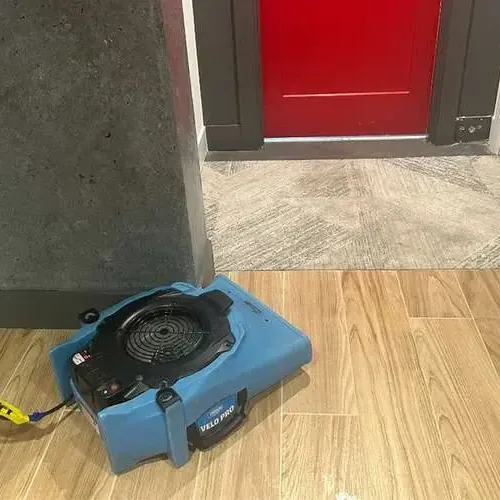
A roofer repairs flashing, vents and shingles or sets a temporary cover. The restoration crew removes wet insulation and damaged drywall, then dries the attic and ceiling cavity.
For larger losses the roof leak repair and water damage service for the wider area follows the same order.
- Ask the roofer to photograph the failed spot and share the pictures.
- Share the roof photos with the restoration crew so they can trace the water path.
- Have the crew confirm dryness before ceilings are closed and painted.
- Keep both invoices and photos together for the claim process.
Questions
Why did a ceiling stain appear days after the storm?
Water travels along framing and soaks into insulation before it drips through drywall. The stain can show up well after the rain and far from the actual leak.
Should wet attic insulation be removed?
Usually yes in the wet area. Wet insulation holds water against the ceiling and does not dry well in place, so it is pulled out and replaced after the roof is sealed.
Can a homeowner tarp a roof after a windstorm?
It is a risk, especially on a wet or windy roof. A trained roofer can install a temporary cover safely, and a crew can control the water inside until then.
Is a sagging ceiling dangerous?
It can be. Water adds a lot of weight to drywall, and a bulging ceiling may drop. Keep people and pets away, and relieve it only at the lowest point with care.
Does a roof leak mean the whole ceiling must be replaced?
Not usually. Only the wet drywall is cut out, and sound sections are dried in place and repainted. Moisture readings decide the boundary.