Structural Drying and Dehumidification in Stanwood
Extraction removes the water, but framing, subfloor and plaster hold moisture for much longer. Structural drying places equipment on a plan, reads the materials every day and keeps going until they match a dry reference.
(888) 509-1696Ask about a drying plan- Air movers and LGR dehumidifiers
- Daily moisture readings
- Psychrometric log
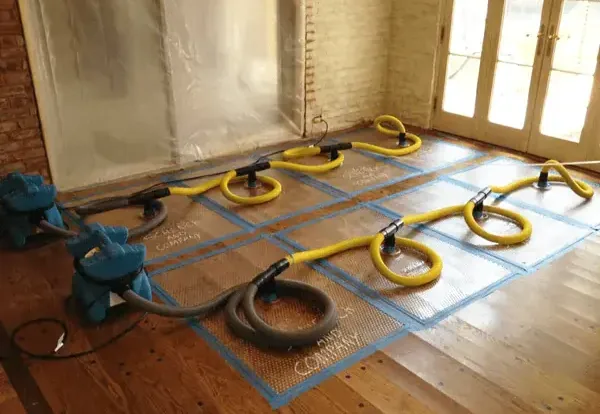
First steps for structural drying and dehumidification
Do not seal it up
Leave wet walls and floors uncovered so moisture can escape.
Keep the air moving
Run existing fans, and keep doors between wet and dry rooms closed.
Leave equipment alone
Drying machines should stay plugged in and running as placed.
Note changes
Mention new odors, stains or soft spots to the crew.
The standard behind structural drying and dehumidification
Rapid local response
Dispatch runs 24/7, and an active leak, flood or backup is treated as urgent on nights, weekends and holidays.
IICRC S500 drying standard
The drying team maps moisture first, sizes air movers and LGR dehumidifiers to the load and keeps them running until the readings say dry.
Claim-ready documentation
Timestamped photos, the moisture map and daily drying logs go into one file an adjuster can follow.
Skagit Valley water know-how
Crawl spaces, river floodplain lowlands, damp winter air and hard freezes all change how water moves through a house here.
What does structural drying and dehumidification cost in Stanwood, WA?
Drying cost follows the materials and how long the equipment runs. Drywall and carpet sit in the first range, hardwood or plaster in the second, and crawl space framing with subfloor in the third.
Drywall and carpet
$1,200 to $2,800- Air movers and dehumidifiers placed
- Daily moisture readings
- Psychrometric log kept
Hardwood or plaster
$2,800 to $5,000- Floor mats under the boards
- Longer equipment run
- Desiccant added if needed
Crawl space framing and subfloor
$4,000 to $7,500- Dehumidifiers set below the floor
- Joist and subfloor readings
- Space contained during the dry-out
Ranges are typical, not a quote. Water category, square footage, material class and how fast drying started move the number most. The water damage cost calculator gives a planning range.
How structural drying and dehumidification is handled, step by step
- 1
Map
Moisture readings across every wet surface set the starting numbers and the equipment plan.
- 2
Place
Air movers and dehumidifiers go in where the map shows the most water.
- 3
Track
Temperature, humidity and moisture are logged every day and the setup is adjusted.
- 4
Verify
Equipment comes out only when wet materials match the dry reference.
In Stanwood, as elsewhere, drying a structure is closer to engineering than to running fans. Water leaves materials only when the air around them can accept it, so the work balances temperature, humidity and airflow, and measures the result rather than assuming it.
Why wet seasons make drying harder
The city sits in the AE flood zone, with floodwalls and a Skagit Bay Dike repair under way, so structures near the Stillaguamish River face repeated wet seasons. Humid air slows drying, which is why dehumidifiers matter more than fans alone in winter.
A drying plan is built around:
- Moisture mapping that marks every wet surface before equipment is placed.
- Air movers set along walls and floors to lift water off materials.
- LGR dehumidifiers that pull that moisture out of the air.
- Daily readings that decide when equipment is moved, added or removed.
Materials dry at different speeds
Drywall and carpet release water quickly, while hardwood, plaster and framing hold it far longer. Floor drying mats pull moisture through boards, desiccant units help in cold or damp conditions, and the plan changes as the readings change.
A wall that feels dry to the hand can still read wet inside, so readings are taken at depth and compared across several spots.
Proving it is dry
Equipment stays until readings from wet materials match readings from a dry reference, within a small margin. A psychrometric log of temperature, humidity and grain readings is kept each day, so the adjuster can see the dry-out followed the standard. This work follows water extraction and supports flood water cleanup jobs.
Structural drying and dehumidification across Stanwood and nearby towns
Drying crews work throughout the city, from the waterfront and Market Street to the hill area, Cedarhome and nearby communities, with ZIP code 98292 as the main service territory.
The same service nearby: structural drying and dehumidification in Mount Vernon, Oak Harbor, Burlington.
Related water damage services in Stanwood
Structural Drying and Dehumidification questions, answered
Why not stop when the surface feels dry?
Surfaces dry first while framing and subfloor hold moisture inside. Readings at depth show the real condition, which is what prevents odors and later damage.
Why do dehumidifiers matter in winter?
Cold, damp air cannot absorb much moisture, so fans alone stall. Dehumidifiers lower the humidity in the room so water keeps leaving the materials.
How loud and disruptive is the equipment?
Air movers and dehumidifiers run continuously and make steady noise, and the machines take up floor space. Rooms stay usable but are noisy until the dry-out ends.
What is a psychrometric log?
It records temperature and humidity in the room and at the equipment, so the adjuster can verify the drying conditions were maintained throughout.
Does structural drying prevent mold?
It removes the moisture mold needs, which is the main control. Fast extraction and steady drying matter more than any spray applied afterward.
Can drying continue while people live in the home?
Usually, yes. Equipment is placed to leave a path, and rooms with the heaviest damage may be closed off until readings improve.
Get the structure drying to a number
A crew can map the moisture, place equipment on a plan and log the readings every day, so the structure dries to a verified number the claim can rely on.