Water Extraction and Removal in Oak Harbor
Standing water is the first job. Truck-mounted and portable extractors pull it out of carpet, pad and hard floors, and moisture meters show what the surface hides before drying begins.
(888) 509-1696Call about standing water- Truck-mounted extraction
- Wet pad removal
- Moisture-mapped rooms
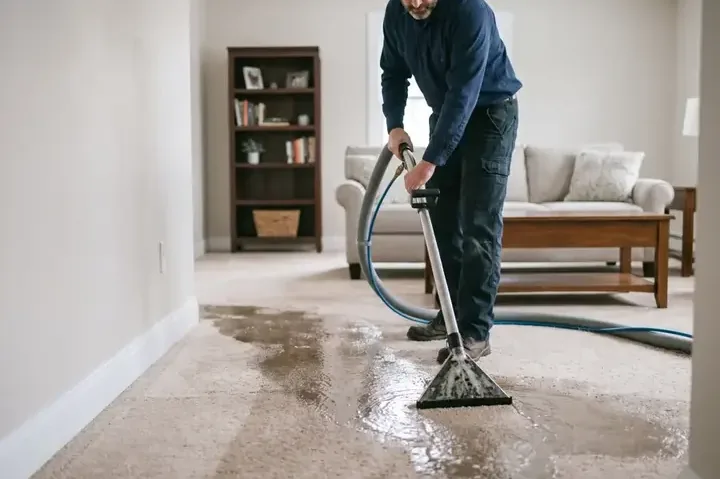
First steps for water extraction and removal
Stop the water
Close the supply valve if a pipe is the source, and keep power off near wet outlets.
Move contents
Lift furniture and small items off wet carpet or tile.
Document it
Photograph the water and note the time it was found.
Call a crew
Pumping early keeps water out of pad, trim and cabinet bases.
The standard behind water extraction and removal
Rapid local response
Dispatch runs 24/7, and an active leak, flood or backup is treated as urgent on nights, weekends and holidays.
IICRC S500 drying standard
The drying team maps moisture first, sizes air movers and LGR dehumidifiers to the load and keeps them running until the readings say dry.
Claim-ready documentation
Timestamped photos, the moisture map and daily drying logs go into one file an adjuster can follow.
Skagit Valley water know-how
Crawl spaces, river floodplain lowlands, damp winter air and hard freezes all change how water moves through a house here.
What does water extraction and removal cost in Oak Harbor, WA?
Extraction alone runs from $600 for a single carpeted room to $4,000 for hard floors with pad removal. Size, floor type and pad removal set the price.
A single carpeted room
$600 to $1,500- Truck-mounted pass
- Pad tested with a meter
- First air movers placed
Several rooms or a hallway
$1,500 to $3,000- Extraction room by room
- Moisture map written up
- Dehumidifiers running
Hardwood, tile and pad pulled
$2,500 to $4,000- Mats set on wood floors
- Wet pad bagged
- Baseboards lifted where damp
Ranges are typical, not a quote. Water category, square footage, material class and how fast drying started move the number most. The water damage cost calculator gives a planning range.
How water extraction and removal is handled, step by step
- 1
Survey it
Meters check floors and wall bottoms before any pumping begins.
- 2
Extract it
Units pull water from carpet, pad and hard floors.
- 3
Remove it
Ruined pad and wet trim come out and are bagged.
- 4
Hand it off
Air movers and dehumidifiers take over for drying.
Extraction comes before drying: the bulk water is removed so equipment is not left to evaporate gallons out of carpet and wood. In Oak Harbor the water can come from storm rain, as in the November 2021 windstorm that flooded streets, or from a plumbing failure inside the house.
Where the water goes
Water spreads sideways along floors and downward through pad and subfloor into the bottoms of walls. Extraction starts at the lowest point, works toward the edges and follows readings into rooms that look dry.
- Carpet extracted from the top and again from beneath the pad
- Tile and sealed floors cleared with wands and squeegee tools
- Hardwood treated with floor drying mats
- Wall bottoms probed before baseboards come off
Who calls, and why it matters
Renters live in a little over half of occupied homes here, so many calls start with a tenant and a landlord. Photographs of the water and the date it was found help whoever files the claim, whether that is the owner or a renter's insurer.
After the pump-out
A second pass with meters decides what stays. Pad that cannot dry is bagged, baseboards are popped where moisture sits behind them, and air movers and dehumidifiers go in for structural drying. Larger losses continue as flood water cleanup.
Contents are lifted onto blocks or moved out so the crew can reach the full floor, and electronics and paper are set aside dry.
Water extraction and removal across Oak Harbor and nearby towns
Extraction crews serve ZIP 98277 and 98278, from Old Town and Midtown to Scenic Heights, Swantown, Broad View and the neighborhoods along State Route 20.
The same service nearby: water extraction and removal in Mount Vernon, Anacortes, Stanwood.
Related water damage services in Oak Harbor
Water Extraction and Removal questions, answered
Can a wet vac do the job?
A wet vac removes surface water but leaves most of it in the pad and subfloor. Truck-mounted units pull far more, and meters then show what remains.
Is carpet pad always thrown out?
Pad that sat in clean water briefly can sometimes be dried, but contaminated or long-soaked pad is removed because it holds water against the subfloor.
Does extraction work on hardwood?
Yes, with floor drying mats that pull water up through the boards. Early action decides whether the wood cups or can be saved.
Why do crews check walls after pumping?
Water wicks into drywall and baseboards behind the visible puddle, so meters and probes find the wet areas that the extractor cannot reach.
Will I need drying after extraction?
Almost always. Extraction removes the bulk water, and structural drying removes what is left in the framing and finishes.
How long does the extraction itself take?
Extraction is usually the shortest phase, a pass of pumping through each wet room, and it ends when meters show no more recoverable water.
Get the standing water out
Call about the standing water, and the crew explains which rooms need pumping, what pad may come out and what the adjuster will ask for.