Commercial Water Damage in Stanwood, WA
A water loss in a shop, office or clinic costs money every day the doors stay shut. The work isolates the wet area, extracts and dries in phases, and documents each step so the property owner and the insurer both have a record.
(888) 509-1696Ask about a business water loss- Phased drying plans
- Containment from open areas
- After-hours work
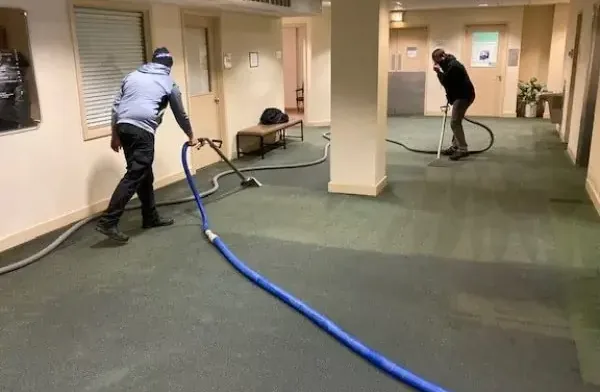
First steps for commercial water damage
Protect people first
Keep customers and staff out of wet areas, and shut off power to affected circuits.
Stop the source
Close the building or suite shutoff, or note the pipe, roof section or drain at fault.
Protect inventory
Move stock and files up and away from the water where it is safe.
Document the loss
Photograph damage and inventory before cleanup, and keep receipts for emergency costs.
The standard behind commercial water damage
Rapid local response
Dispatch runs 24/7, and an active leak, flood or backup is treated as urgent on nights, weekends and holidays.
IICRC S500 drying standard
The drying team maps moisture first, sizes air movers and LGR dehumidifiers to the load and keeps them running until the readings say dry.
Claim-ready documentation
Timestamped photos, the moisture map and daily drying logs go into one file an adjuster can follow.
Skagit Valley water know-how
Crawl spaces, river floodplain lowlands, damp winter air and hard freezes all change how water moves through a house here.
What does commercial water damage cost in Stanwood, WA?
Commercial cost follows the square footage affected and the water category. A single suite or storefront sits in the first range, several suites or a full floor in the second, and a whole building or Category 3 loss in the third.
One suite or storefront
$3,000 to $8,000- Water extracted and dried
- Open areas kept contained
- Claim records kept
Several suites or a full floor
$8,000 to $20,000- Phased drying across suites
- Units above and below checked
- Evening work scheduled
Whole building or Category 3
$20,000 to $40,000+- Large containment zones
- Porous materials removed
- Extended dry-out with logs
Ranges are typical, not a quote. Water category, square footage, material class and how fast drying started move the number most. The water damage cost calculator gives a planning range.
How commercial water damage is handled, step by step
- 1
Assess
The crew walks the loss with the owner, finds the source and sets containment boundaries.
- 2
Isolate
Barriers and air scrubbers separate wet areas from tenants, customers and clean spaces.
- 3
Phase
Extraction, removal and drying are staged by area, with noisy work set for off hours.
- 4
Verify
Daily readings and a final dry confirmation go to the owner and the adjuster.
In Stanwood, commercial losses have two clocks running: the damage clock and the business clock. The goal is to dry the building properly while keeping as much of it open and earning as the water category and the layout allow.
Where businesses sit
Stanwood has business districts on the waterfront, along Market Street and in the hill area, and each setting has its own exposure, from river and storm water near the waterfront to storm-driven roof leaks on higher ground. KUOW lists City Hall, the police station, three schools and three nursing homes among the structures threatened if the levee failed.
A phased commercial plan usually covers:
- Containment barriers that separate wet areas from open space.
- Extraction and drying staged room by room or suite by suite.
- Noisy or disruptive work moved to evenings and weekends.
- Written updates for the owner, tenants and the adjuster.
Tenants, units and shared walls
In multi-tenant buildings water crosses walls, ceilings and shared utility spaces, so units above and below the loss are metered even when they look dry. Apartment hallways and corridors are protected to keep other residents safe and unaffected.
Documentation for owners and insurers
Commercial claims often involve business interruption, so dated photos, moisture maps and daily logs show exactly how long the space was affected. Larger losses combine this with structural drying and, when a drain is the source, sewage backup cleanup.
Commercial water damage across Stanwood and nearby towns
Commercial crews cover the waterfront, Market Street and hill area business districts, apartment buildings and offices across the city, and nearby communities in ZIP code 98292.
The same service nearby: commercial water damage in Mount Vernon, Oak Harbor, Burlington.
Related water damage services in Stanwood
Commercial Water Damage questions, answered
Can a business stay open during drying?
Often, yes. Containment separates the wet area, and equipment is placed to leave aisles and entrances usable, with noisy work moved after hours.
Who is responsible in a leased space?
The lease decides. Owners and tenants should notify their insurers, and the restoration records are written so either side can use them.
How is a multi-unit building handled?
Units above and below the source are metered and dried together, and shared walls and corridors are protected so neighbors stay unaffected.
What about inventory and equipment?
Items are lifted, moved or covered early, and a list with photos supports the claim. Porous stock that touched Category 3 water is usually discarded.
Does flood risk matter for commercial buildings here?
The city is in the AE flood zone, so river and storm flooding is a known risk, and a flood policy is worth checking separately from property coverage.
Will insurance cover business interruption?
Some policies include it, subject to their terms and waiting periods. Dated records of when areas were closed and reopened help support the claim.
Keep the doors open while it dries
A crew can contain the wet area, extract and dry in phases and record each step, so the business keeps operating and the insurer has the file it needs.